2025/12/27
When you get past how atrocious most of these are, you can really appreciate their value: like all bad works, they're inversely instructive.
=]=:< <"'Value?' What are you talking about? These movies suck dick. Just get started so we can make fun of that scene in The Brutalist where Adrien Brody gets raped. Go."
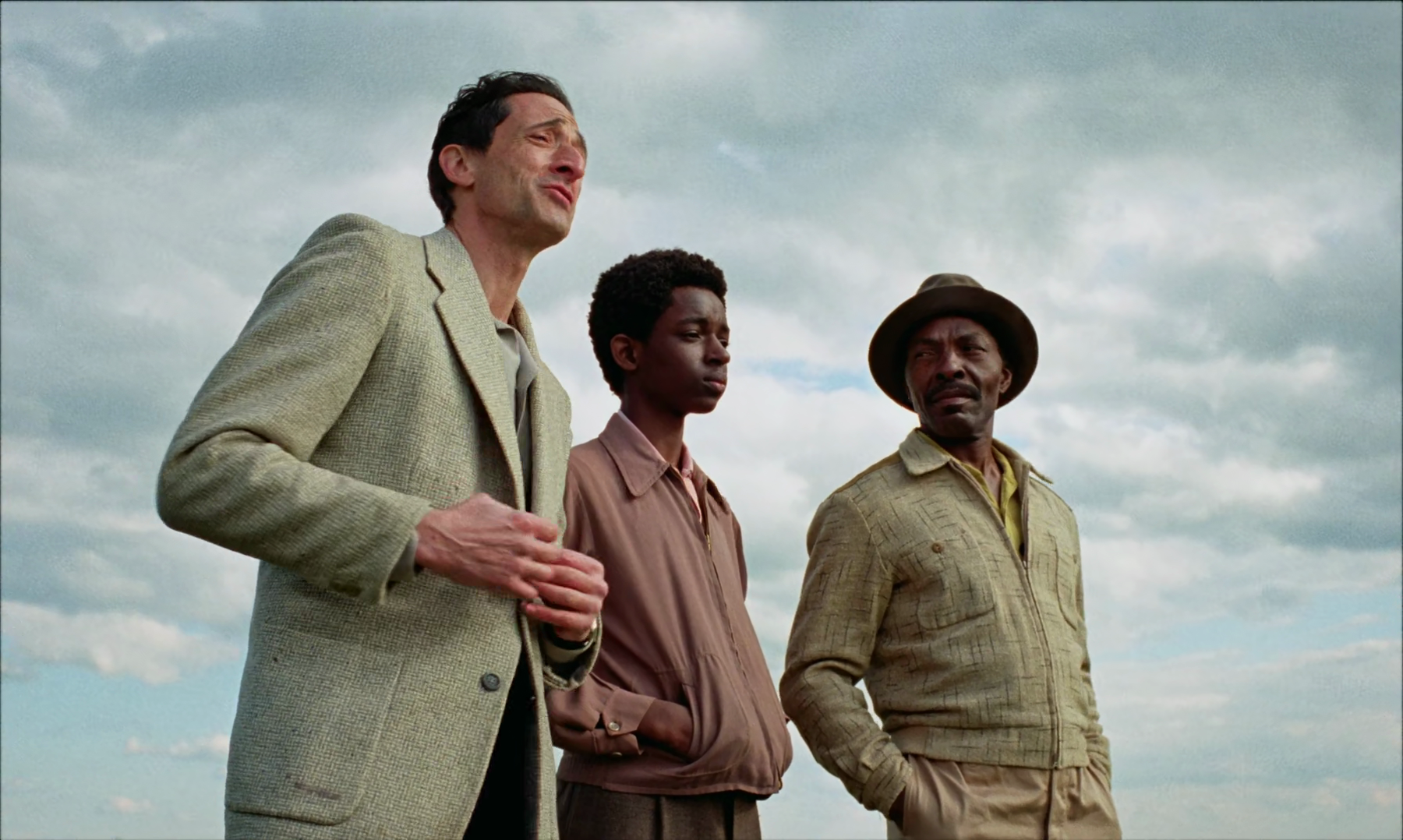
One addled heroin addict and alleged architect (Adrien Brody) reportedly escapes National Socialism to Stateside refuge, where he designs hideous, inefficient, unsafe brutalist monstrosities under the auspices of an ostentatiously evil, exploitative gentile patron (Guy Pearce), who envies, contemns, and eventually rapes him. Oh, and his best friend (Isaach de Bankolé) who justifiably can't stand him is black. The unqualified hit that swept numerous awards festivals with overfed, slovenly Brady Corbet's traumatically overwrought, frequently anachronistic screenplay and fussy yet uninspired direction, goofy performances, Lol Crawley's unexceptional cinematography, and Daniel Blumberg's nondescript score isn't just a ponderous, shopworn golem derived from the miseries of better pictures. It's also a characterless climacteric that signals the beginning of the end of Jewish cinema, once (for good and ill) one of the medium's most exciting and intriguing phenomena, now a shallow vessel for the amaranthine regurgitation and recontextualization of tired propaganda and tacky turpitudes. Everything here is old and gray and dull and dying: heroin, evil white men, black sidekicks, sexual assault interjected for shock value, "the" "H"olocaust. Never mind its preposterous characterizations, titles, and melodrama. That his protagonist is portrayed positively despite his disgusting habitudes, vacuity, and the chutzpah by which he's paid to perpetuate ugliness so to unprofessionally "process trauma" unveils how perverse and backwards Corbet and the arrantly corrupt institutions who ensky him really are.
=]=:< <"I love the screenplay of this movie. It's like something scripted by a highschooler who was ejected from the debate team. I could go on and on about how one-dimensional the characters are and how pretentious and shallow it is, and how much direction it contains, but who cares? Check this shit out:"
	INT. ORAZIO'S ATELIER - LATER

	VAN BUREN walks past a row of statues, looking for the
	toilet. He hears LÁSZLÓ breathing heavy and moves to
	investigate.

				VAN BUREN
			(calls out)
		Mr. T-oth, it's time we return to
		our quarters. Orazio has kindly
		offered us a place to sleep for the
		night.

	VAN BUREN turns to discover LÁSZLÓ slouched against a wide
	marble column in a terrible state, an unspooled pouch of hop
	gear in his lap... His eyes have rolled back in his head.
	He's barely responsive.

				VAN BUREN (CONT'D)
		What have you done to yourself?

	VAN BUREN slides his back down the column and sits next to
	him displaying a casual air.

				VAN BUREN (CONT'D)
		It's a shame seeing how your people
		treat themselves. If you resent
		your persecution, why then do you
		make of yourself such an easy
		target?

	LÁSZLÓ cannot respond.

				VAN BUREN (CONT'D)
		If you act as a loafer living off
		handouts, a societal leech, how can
		you rightfully expect a different
		result? You have so much potential
		and yet you squander it.

	LÁSZLÓ starts to vomit and VAN BUREN moves in behind him,
	pats him on the back.

				VAN BUREN (CONT'D)
		Get it out. Get it out, my friend.

	Below frame, VAN BUREN fusses with his belt. LÁSZLÓ gags and
	coughs.

				VAN BUREN (CONT'D)
		It's all right, my boy. Get it out.

	VAN BUREN systematically pulls down LÁSZLÓ's pants below
	frame. He spits, and thrusts.

				VAN BUREN (CONT'D)
			(whispers, slurs)
		Who do you think you are? You think
		you're special? You think you float
		directly above everyone you
		encounter because you are
		beautiful? Because you are
		educated?

	LONG LENS ON -

	LÁSZLÓ's face is pressed against the ground. He's too strung
	out to defend himself. His eyes widen in terror.

				VAN BUREN (O.S.) (CONT'D)
		You're a tramp. Shh. You're a lady
		of the night.

	The assault is brief but clear.

							FADE TO BLACK.
Not since Schindler's List were the "antisemites" this cartoonis--
=]=:< <"You're a lady of the night! You're just a lady of the night! Ha ha ha ha ha ha!"
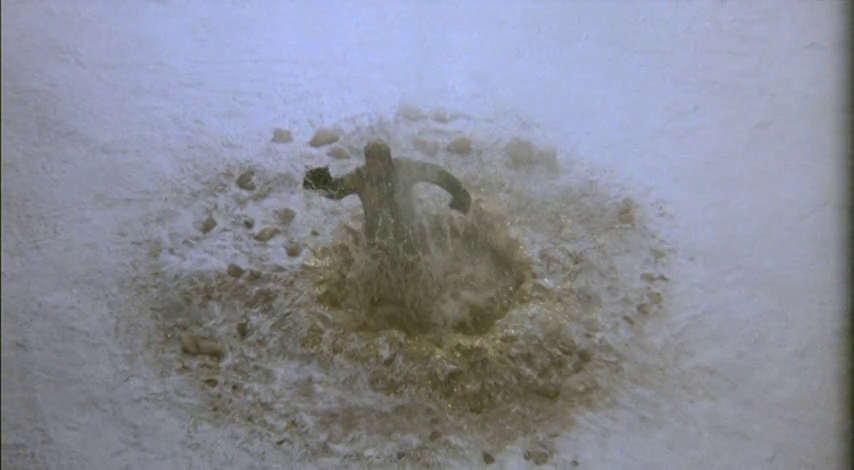
Few filmmakers have so expensively maladapted fascinating stories for cinema while fooling stupid critics who overrated their overheated dreck, but Nicolas Roeg's undeserved luck was depleted when this cleverly conceived but ridiculously executed epic drama flopped as resoundingly as deservedly. In 1925, after twenty years spent searching for gold in the Klondike, a pertinacious prospector (Gene Hackman) strikes a vast motherlode of gold that enriches him immensely. Another score sequent finds him unhappily cloistered at his estate on a Caribbean island that he purchased years before with his loving but miserably alcoholic British wife (Jane Lapotaire), terrified that he's losing his willful daughter (Theresa Russell) to her caddish, dissolute, debonaire Franco-Dutch husband (Rutger Hauer) who she adores and he despises, and solicited by a sleazily pretentious, Jewish realty developer (Joe Pesci) who wants the aged adventurer's island as the site of his next resort. Mafiosi (Joe Spinell, et al.) thus associated brutally eliminate the defenseless nabob in his bed, and his unsympathetic son-in-law is arraigned in a Jamaican court for this murder. Without the intriguing but clumsily realized mysticism involving an oracular madam (Helena Kallianiotes at her canting hammiest) of a Yukon brothel that frames its spectacles, an antic voodoo ritual and grossly unsexy orgy in which Hauer's rakehell and two hideous British prostitutes (Ann Thornton, Emma Relph) participate, and superfluous, obnoxious deliberations every few minutes, this could've been halved with a tasteful economy that's foreign to its director. Hackman is, as usual, tremendous as the dogged goldstriker whose vitality and lust for life are undimmed by the aimless cynicism of his latter years; superb in his every scene, his listless delivery of a nearly monologic confession lamenting his loss of purpose, and impassioned, conclusive reading of a passage from Robert W. Service's Spell of the Yukon are as achingly touching as anything he ever uttered. Roeg's cameras adore Hauer, who regrettably lapses into wacky caricature whilst affecting some kind of posh British accent, and equally photogenic, slimly shapely Russell complements him woodenly....until she hysterically gnaws the scenery of a courtroom when her cuckquean's called to the stand as a character witness at her unfaithful husband's trial for murder, where she decides that it's the perfect venue to loudly spout poetastery and pour her heart out as though she's undergoing marital counseling. Rancid melodrama! As observed in most of his other screenplays, Paul Mayersberg's farrago of concepts imaginative and moronic was cobbled with scant consideration for tonal consistency or discernment of non-British sensibilities; its comprehension of profound and preposterous dialogue is ultimately bewildering. A great filmmaker like Herzog or Friedkin might've rescripted to elevate this fictionalization of entrepreneur Harry Oakes's murder, but Roeg's unfocused, ham-fisted direction -- replete with its excessively dissolving alternations, wonkily adorable handheld closeups, goofy zooms, chaotic manual maladroitness, and idiomatic discordance -- sinks what might've been a fine vessel for the critique of ambition as pleasure and an end unto itself.
=]=:< <"Theresa Russell is so bad in this that her worst scenes are a like a masterclass of how not to deliver your lines."
"Ohhhhh, Clauuuuuuude!"
=]=:< <"Ha-ha! Exactly! By the way...."
	INT. VAN BUREN ESTATE - DINING ROOM - CONTINUOUS

	VAN BUREN and HARRY LEE are seated at the table. A few
	UNRECOGNIZABLE ASSOCIATES are present, as well. They all rise
	to greet her.

				ERZSÉBET
		Please sit.

				HARRY LEE
		Mrs. Toth, you're up on your feet!

	VAN BUREN regards her.

				VAN BUREN
		Where is László?

				ERZSÉBET
	He's caught a flu. He's recovering
	at home.

				HARRY LEE
		That explains it! Jim Simpson
		mentioned he hadn't been on-site
		since last Friday.

				VAN BUREN
		Shame.

				ERZSÉBET
				(cold)
		Yes. A terrible shame.

				HARRY LEE
		It's going around. Please, sit
		down.

	ERZSÉBET refuses to sit.

				ERZSÉBET
		I'm fine to stand.

				HARRY LEE
		Fine to stand? Is something wrong,
		Mrs. Toth?

				ERZSÉBET
		Yes, something is wrong.

	The blood runs cold.

				ERZSÉBET (CONT'D)
		I've come tonight to tell you
		something that is going to be very
		difficult to hear.

	VAN BUREN shoots a look at her.

				ERZSÉBET (CONT'D)
		And for you people too. I don't
		know you but it will be difficult
		for you to hear.

				HARRY LEE
		If this is a professional matter
		then perhaps you and I should talk
		in the other room.

	HARRY stands.

				ERZSÉBET
			(calm, resolute)
		Your father is a rapist.

				HARRY LEE
		Excuse me - whatever this is
		supposed to be, I don't like it.
		I'm calling your husband to come
		and fetch you.

				ERZSÉBET
		Your father is an evil rapist.

	MAGGIE LEE believes her. HARRY rushes her.

				MAGGIE LEE
		Don't push her, Harry!

	VAN BUREN is silent.

				ERZSÉBET
		Look at him. He cannot say
		anything.

				MAGGIE LEE
		Daddy, has something happened
		between you and Mrs. Toth?

				ERZSÉBET
		It wasn't me-

				HARRY LEE
				(shouts)
		That's enough. You come in here
		making vague, laughable
		accusations! I want you out of our
		house this instant.

				ERZSÉBET
		Tell them what you did to my
		husband. Tell them what you did.

	MAGGIE covers her face, horrified by the accusation.

				VAN BUREN
		Your husband is sick. He is an
		alcoholic and a drug addict. I
		don't know why he wishes to hurt
		me, humiliate me.
		I have offered him nothing but
		kindness. He's a sick, senile old
		dog and when dogs get sick, they
		often bite the hand that's fed them
		before someone mercifully puts them
		down.

	VAN BUREN stands.

				VAN BUREN (CONT'D)
		Now, if you'll excuse me, I've
		withstood enough abuse for one
		evening. You can tell your husband
		he's off the payroll now and
		forever, as well.

	ERZSÉBET explodes.

				ERZSÉBET
		I WILL NOT EXCUSE YOU!

	HARRY starts violently dragging her out of the room.

				MAGGIE LEE
				(shouts)
		Stop it, Harry!

				ERZSÉBET
		YOU ARE NOT EXCUSED, HARRISON VAN
		BUREN!

	HARRY muscles her all the way to the foyer.

	INT. VAN BUREN ESTATE - FOYER - LATER

	He drags her all the way to the front door where she falls.

				MAGGIE LEE (O.S.)
				(shouts)
		Stop it, Harry!

				ERZSÉBET
		SHAME! SHAME ON YOU!

	MAGGIE LEE screams from off-screen and comes running to
	ERZSÉBET's aid.

				ERZSÉBET (CONT'D)
		I'm fine, Maggie. I'm fine. Can you
		help me to my car? A taxi's waiting
		for me at the front.

	HARRY LEE opens the door and sets her walker outside.

				HARRY LEE
		You never come back here, you crazy
		woman.

	MAGGIE gets ERZSÉBET to her feet. They stumble to the front
	door and exit. HARRY LEE exhales, paces back and forth, then
	walks back to the dining room. The camera follows...

	INT. VAN BUREN ESTATE - DINING ROOM - CONTINUOUS

	The guests are standing to leave.

				HARRY LEE
		I am so sorry for the bizarre
		interruption.

				GUEST
		It's all right, Harry. We'll leave.

				HARRY LEE
		Don't leave yet. Please.

				GUEST
		Your father's gone to bed.

	He turns on his shoe.

	INT. VAN BUREN ESTATE - FOYER - CONTINUOUS

	HARRY LEE walks back again the way he came.

				HARRY LEE
				(shouts)
		Father! It's over now. She's gone!

	HARRY LEE turns a corner-

	INT. VAN BUREN ESTATE - STAIRWELL - CONTINUOUS

	-and moves up the stairwell.

	INT. VAN BUREN ESTATE - CORRIDOR - CONTINUOUS

	He walks down the hallway to his father's bedroom at the end
	of the hall. He opens his father's door. The room is empty...
	He turns back the way he came then stops at his father's
	study. It's empty, as well.

				HARRY LEE
				(shouts)
		Dad!

	He opens every door on the floor. Nothing. Nothing. Nothing.

				MAGGIE LEE (O.S.)
		Is he not upstairs?

				HARRY LEE
				(shouts)
		Where the hell has he gone? Call
		for him outside.

	INT. VAN BUREN ESTATE - STAIRWELL - CONTINUOUS

	He starts back down the stairs, increasingly panicked.

	INT. VAN BUREN ESTATE - FOYER - CONTINUOUS

	He crosses to the front door and exits to the driveway.

	EXT. VAN BUREN ESTATE - DRIVEWAY

	He calls out with increasing desperation for his father.

				HARRY LEE
				(shouts)
		DAD!

				MAGGIE LEE (O.S.)
		DADDY?! Can you hear us?!

	NOTE: End of continuous take.
Incredible. This is almost a masterwork of avant-garde, post-ironic comedy.
=]=:< <"I don't wanna believe that it isn't. I honestly want to believe that Brady Corbet's not only a genius, but one of the funniest men alive. I'll watch that scene 20 times, the way we'd watch the scene where Charles Bronson kills Gavan O'Herlihy with a rocket launcher at the end of Death Wish 3."
It's as hilariously rewatchable as that scene in Cider House Rules where pissed-off Michael Caine indignantly aborts Erykah Badu's incestuous baby.
=]=:< <"Yeah, Cider House. Exactly."
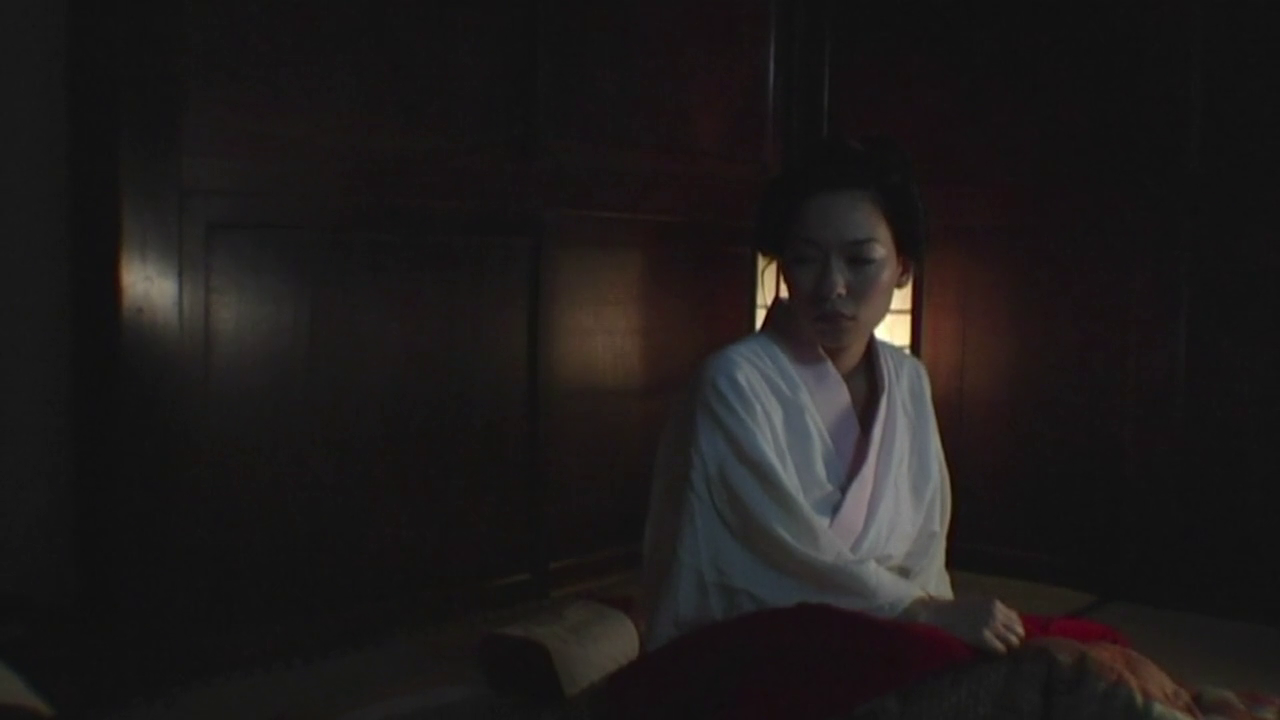
Shoes enjoy popular ascendance in the Meiji era, so a rural geta-shi (Yuya Ishikawa) can't make ends meet, and is forced into debt to his lecherous burgermeister (Masayoshi Nogami) so that he and his pretty, demanding wife (Kaho Kasumi) can eat regularly. These spouses stage her death so that the moneyed mayor will pay for her funeral, providing them with the means to relocate to and finance new enterprises in Osaka, but it all goes goofily wrong. To enjoy most of the genuinely funny and moving moments, or steamy, penultimate amation in Tetsuya Taketodo's lusty video, one must sit through chatty, unfunny hijinks of two oversexed local yokels (Yuya Matsuura, Tomohiro Okada), which will strain the patience of even the most dedicated enthusiast of Roman pornos. For fans of drop-dead gorgeous pornstar Kasumi, this may be worth the trouble. Others should avoid it.
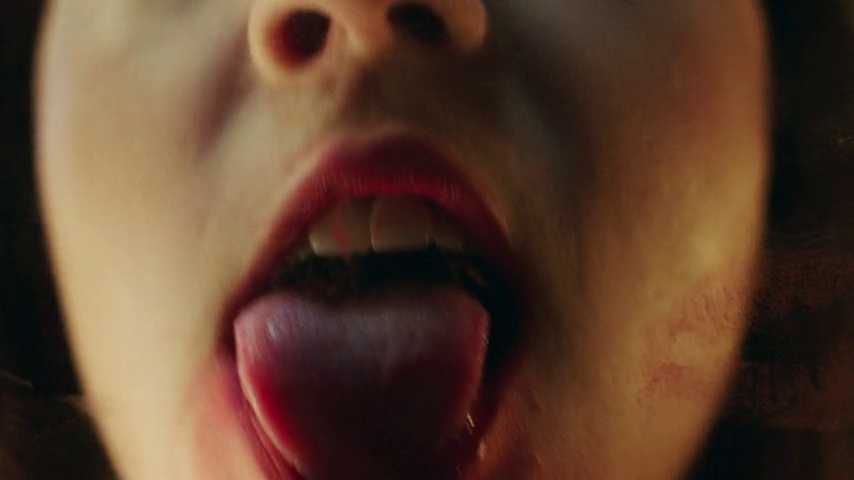
A paucity of public interest and meager tallies of box offices demonstrate how the supply of inanely irksome movies that are penned and helmed by ostentatious and oversold women far outstrips their demand, but these are among the chief cultural exports of the Francosphere, so Julia Ducournau's loud, dim, maladroitly metaphorical, quasi-horror drama was immediately accorded international distribution and the most perfunctorily glowing critical acclaim that Wild Bunch's, Petit Film's, and their co-producers' money could buy. For her intromission to the collegiate society of a Belgian veterinary school where she's matriculated, a precocious, reticent freshman (Garance Marillier) who's as neurotically vegetarian as her weathered parents (Laurent Lucas, Joana Preiss) is with her class subjected to hazing by upperclassmen who run riot in the apparent absence of any administration. While bonding with her oafish, gay roommate (Rabah Nait Oufella) and clashing with her skanky, senior big sister (Ella Rumpf), she gradually develops an anthropophagous appetite while her personality degrades in acculturation to the studentry's noxious, witless, calculated classlessness. Whether to make modestly comely Marillier look comparatively prettier, emphasize Ducournau's dedication to hideosity, or both, everyone else who's onscreen -- co-stars, extras, etc. -- are jarringly, offensively ugly in her overblown, Eurotrashy dreck, which delivers as neither a mature character study nor an effective horror flick because she's more interested in belaboring her subtextural pretenses, which are realized as her shallow characters' idiotic behavior, and as complex (but dumber) than themes routinely plied in genre pablum. Her marginally able oversight is more tolerable than her script, but this directrix's pandemonia are so stagily contrived that they play out like abysmal (and most) interpretive theater. As intolerably, cutesily edgy as the movie's rancid ipsism, Jim Williams's mincing score and trashily crappy tracks by Orties and Blood Red Shoes subserve to intensify the modest miasma by which this movie physically sickened European audiences, whose remarkably low threshold for gore and mayhem is as embarrassing as the concept of cannibalistic trauma as a metaphor for adversities that accompany academic initiation. One can reliably regard these as symptoms indicating the shrinking brains and balls of the continent's soft, midwitted, westernmost populaces.
=]=:< <"Veggies and vegans are stupid and crazy. Got it."
Sure, but that's just one aspe--
=]=:< <"Nope. Got it."
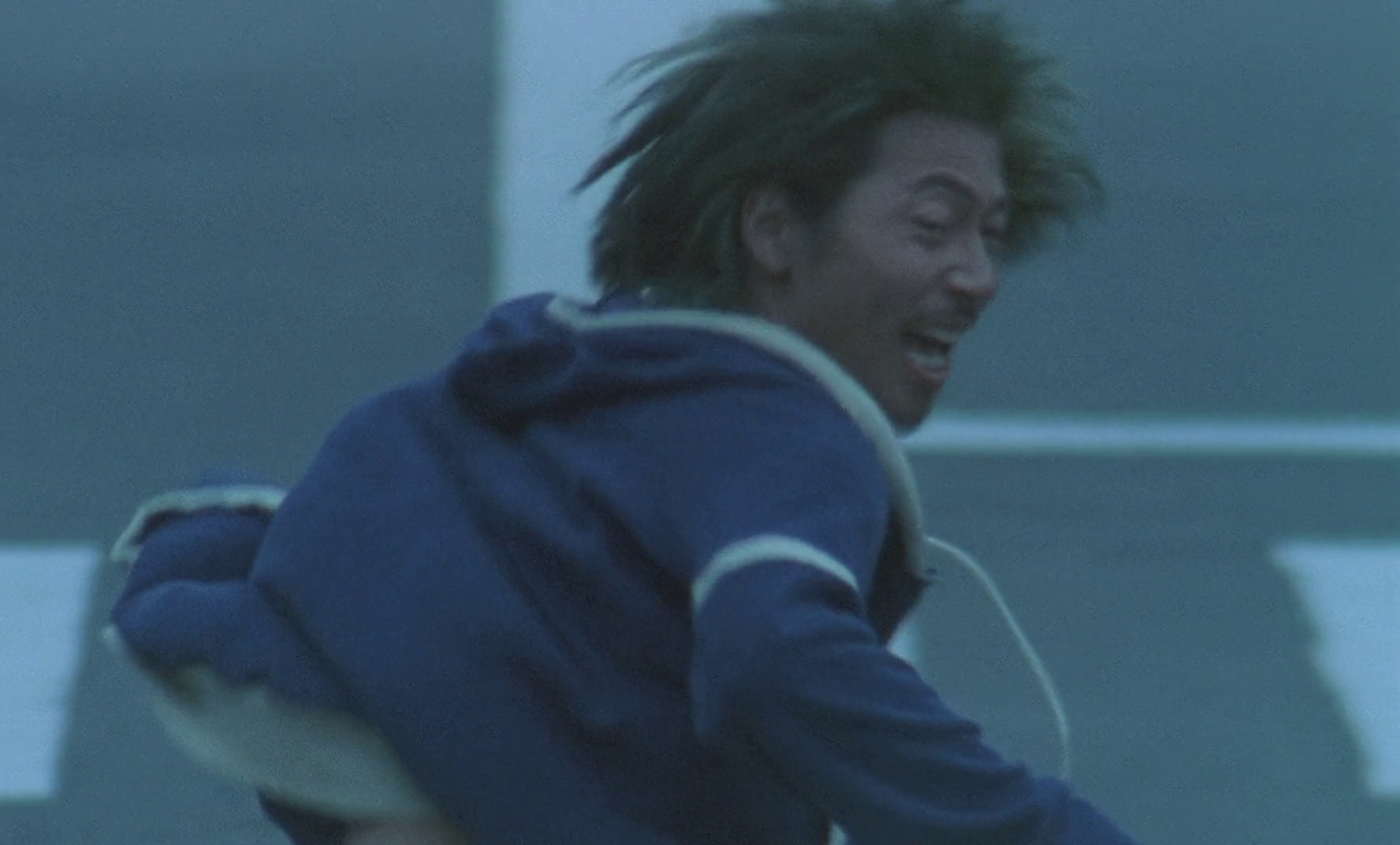
To exploit Japan's unrivaled economy, immigrants legally documented and otherwise flock to Tokyo in some fantastical future beforewhich the asset bubble presumably didn't burst in '89. Domiciled in a grimy, ramshackle slum, one particularly obnoxious pack (Hiroshi Mikami, Chara, Shiek Mahmud-Bey, et al.) of Chinese, Americans, Indians, Italians, Brazilians, et al. ply cheap scams and grifts before the only intelligent crook among them (Atsuro Watabe) chances upon a counterfeiting scheme that enriches them, elevates the aforementioned leading lady's prostitute to fame as a singer fronting a rock band, provides thitherto unknown security to the traumatized, adolescent orphan (Ayumi Ito) under her wing, and puts them in the potential crosshairs of a vicious Chinese counterfeiter (Yosuke Eguchi) and his colorful top assassin (Andy Hui). Iwai's worst feature resulted largely from his fumbled attempt to juggle three genres, which reminds one of how much more proficiently and profoundly Oshima depicted the young and marginalized, Imamura probed eccentrics at the bottom of society, and his protege Miike garishly blazoned organized criminals, and esp. embittered upstarts of Chinese provenance. For every good, interpersonally symbolic or metaphorical concept presented, Iwai has ten terrible ideas manifest in his horrendously unfocused and porous plot, moronic dialogue, and mostly blatant, sleazily unlikable characters. One of the few film editors who ordinarily cuts rapidly in a tasteful and meaningful manner, most of his overzealous chopping is here needlessly distracting, despite some cleverly cut flourishes and slickly subtle transitions. Performances vary wildly: dour Ito simply, realistically bares her foundling's vulnerability and development; as frontman or fille de joie, Chara embodies a jaded persona that's equally and admirably reserved; Hui is engagingly wacky playing a slightly more clownish gunman than usual; despite his considerable screen presence, Mikami's far too hammy, as are most of his ugly, talentless, foreign co-stars (hideous, insufferable voice actor Kent Frick is an especially heinous offender in this regard). Alas, most of the best players haven't sufficient screen time: Yoriko Doguchi's frigidly bitchy record agent contrasts memorably with a chipper talent scout represented by Tomoro Taguchi, and Kaori Momoi breathes plenty of her typically earthy personality into a tabloid's muckraker who for different aims is hazardously, conterminally following the same leads pertaining to Chara's chanteur as the Chinese mobsters who hunt her. Incidentally, only the women of this production can act ably while speaking marginal Engrish as lingua franca. Terrible though it is, Iwai's successful, celebrated crap is nonetheless admirable for Noboru Shinoda's characteristically colorful, splendent, often glowing cinematography, and a warmly moving (albeit often sentimentally misplaced) score by Takeshi Kobayashi, who composed with Iwai and Chara her eponymous, deservedly hit single. Not many great filmmakers produce their worst picture between two of their best (Love Letter and April Story) at the peak of their powers, and although Iwai's schmaltzy, often tedious, achingly unfunny, abashingly and ostentatiously edgy nadir finds its feet during its last 40 minutes as a bloodily pulpy crime thriller, it neither shows nor tells anything that Miike didn't better in his Black Society and Dead or Alive trilogies. By wasting his and his collaborators' considerable talents on a project informed by his ignorant, optimistic xenophilia, the renaissance man from Sendai inadvertently produced an potently prophetic anti-immigrant picture -- and the future is now.
This was written months before Iwai's tricennial screenings were announced. Interesting, eh?! Never mind what a critical and popular darling this irritating garbage was; Iwai clearly didn't want to mar the success of these reissues (tickets for showings of Lily Chou-Chou sold out yesterday) by including this in their schedule at a time when most Japanese are sick to death of loud, trashy, destructive foreigners. You know what this means: Swallowtail's aged as badly as Iwai's convictions, and I was right, and I am being proven right! I'm so vindicated that I deserve a plaque or a statue or something.
=]=:< <"Yeah, whatever. I just wanna bite most of the people in this movie in half, but especially the black boxer and stupid, ugly white guy who both won't shut the fuck up, the retard with the unibrow in brownface, and that smarmy doctor who tattoos butterflies on chests, and most of the Chinese. This would work if you just got rid of three-quarters of its characters and half of the scenes, and made it all about the tape."
Also, the assassinations.
=]=:< <"I guess."
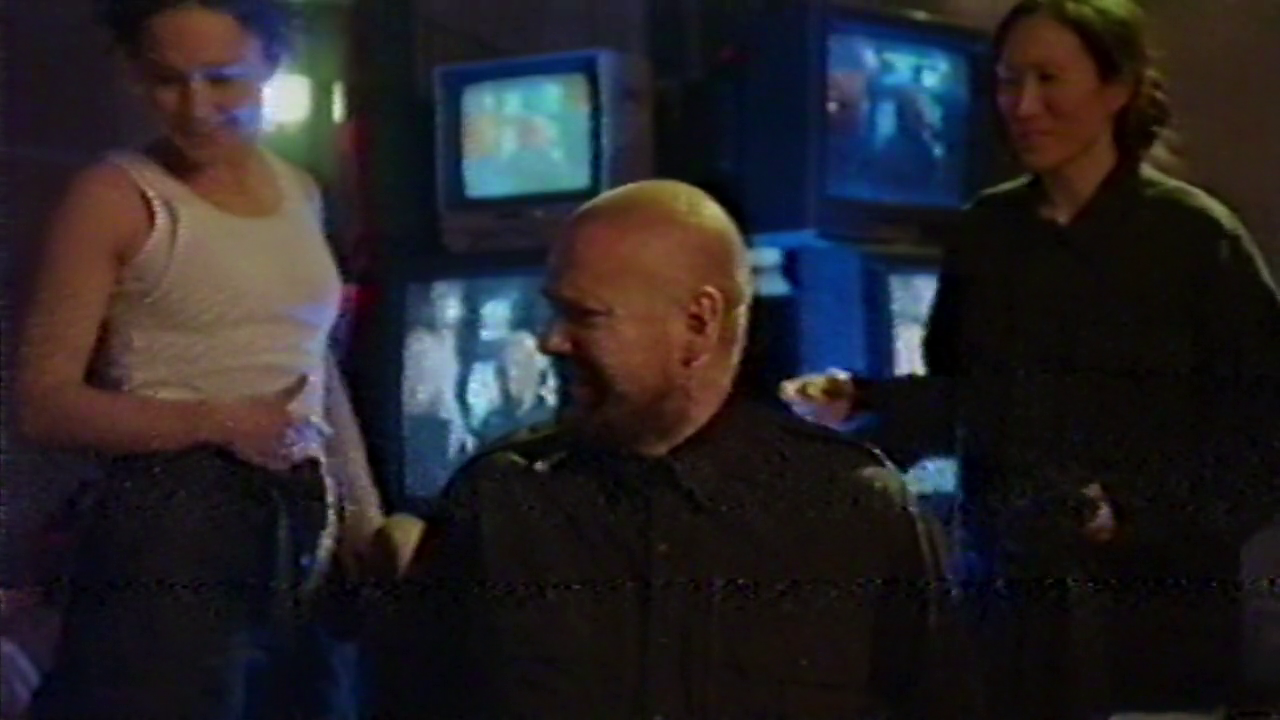
Dismally dumb V/H/S: Viral's sole redeeming segment was Nacho Vigalondo's cross-dimensional Satanic horror Parallel Monsters; this long-awaited and unworthwhile third sequel in the anthologic franchise boasts twice as many flawed yet entertaining shorts among its five set in 1994, but they don't compensate for the deficiencies of its other three, or especially its horrendous frame story. In Jennifer Reeder's Holy Hell, a SWAT team (that exists solely in her imagination and comprehends two small, obnoxious women (Kimmy Choi, Nicolette Pearse) and a fat neckbeard (Thomas Mitchell)) storm a warehouse in an attempted drug bust and instead discover mutilated corpses and video footage of the following portions. Local investigation of an urban legend concerning a murine freak for a telecast puff piece leads an alcoholic news reporter (Anna Hopkins) and her cameraman (Christian Potenza) into a Storm Drain to investigate predictably cultic clichés concocted by smugly undertalented Chloe Okuno. Only one presumed mourner (Daniel Matmor) arrives to pay his respects at The Empty Wake hosted by a funeral home's employee (Kyal Legend), which is oddly, comprehensively shot with multiple mounted camcorders. A cheerful mad scientist (Budi Ros) has kidnapped, drugged, and dismembered over a hundred victims to create cyborg combatants through fatal trial and error; The Subject (Shania Sree Maharani) first among them who operates tolerably seeks to escape, but she's stymied by her captor's abuse, an irruption of soldiers led by an avenging captain (Donny Alamsyah), and the functionality of another, much more dangerous prototype (Shahabi Sakri). Terror is both the aim and failing of bumbling white Christian supremacists (Christian Lloyd, Thomas Mitchell Barnet, Cameron Kneteman, Steven McCarthy, Brendan McMurthey-Howlett, Slavic Rogozine, Daniel Williston) who aim to detonate a Federal complex in Detroit with a photoexplosive substance procured from an imprisoned and familiarly dangerous source. Unsurprisingly, Timo Tjahjanto's The Subject is the winner among these for its black humor and invention, but it's shot on anachronistic HDV, and the best of its often impressive special and makeup effects clash curiously with its worst. Christian nationalists and white supremacists commit but a fraction of the violence perpetrated by their Islamic and Jewish counterparts, so the subject of Ryan Prows's short is as accurately depicted as it is stereotypically lame (every accusation is a confession, as usual), but for those who can roll their eyes and tolerate it, it's also a well-shot, novel approach to vampirism. His former partner Adam Wingard is preoccupied with studio productions of towering budgets, so Simon Barrett was clever to videorecord The Empty Wake mostly with static shots, but risibly expository, muttered dialogue (his worst recurring peccadillo) sinks his enterprise. Reeder's and Okuno's edgily fatuous offerings are by far the worst, and even more evidence in a mountainous pile substantiating this reviewer's insistence that contemporary urban western women are the most mortifying. This co-production was initially streamed exclusively on Shudder, and it's been followed by annual sequels; which are worth watching for the best shorts gleaned is an impossibly subjective guess.
=]=:< <"Eh, it's junk food."
Slop.
=]=:< <"Yeah, slop. I have no idea why you're still watching Ellay trash. Didn't you learn anything from Tales of Halloween?"
I don't know why you're still eating industrial refuse dumped in your swamp. Didn't you learn anything from last year's seizure?
=]=:< <"Touché."
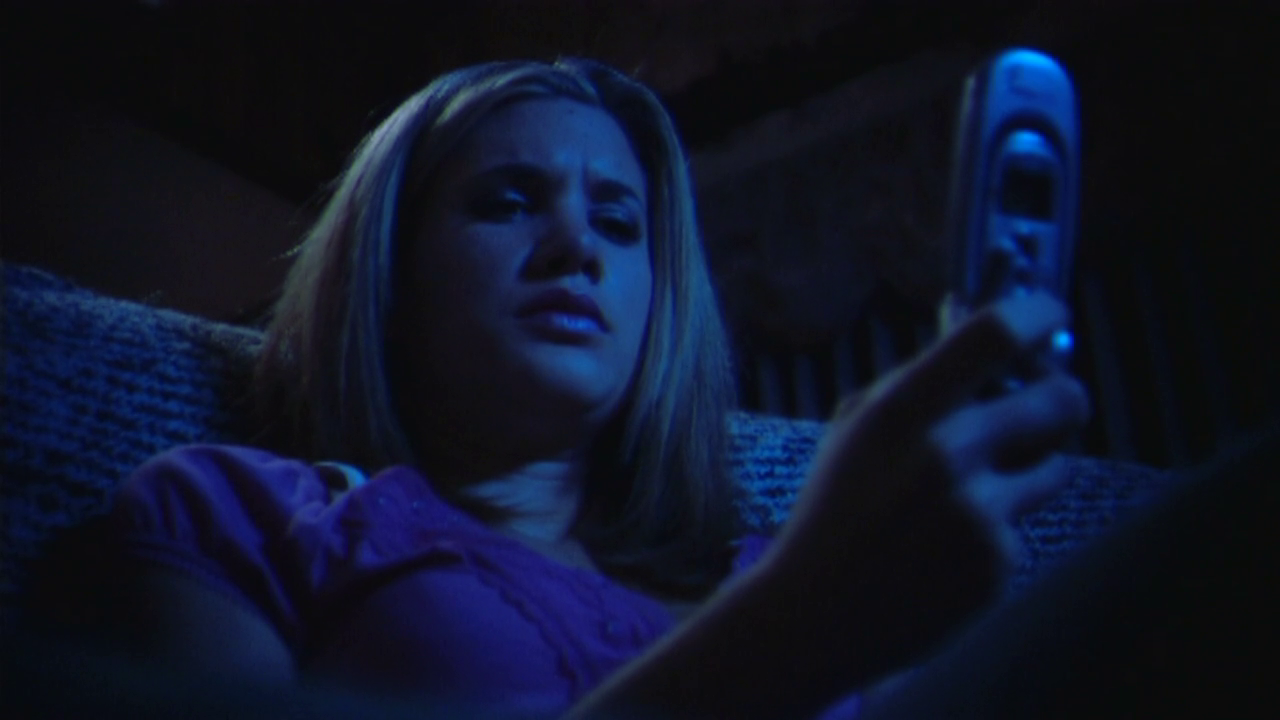
Everything in this painfully doltish, unfunny, quasi-parodic thriller by frequently plugged toilet The Asylum -- direction, cinematography, editing, acting, set dressing -- is so self-consciously egregious that it can't even be recommended to schlockhounds. A dopey babysitter (Rebekah Kochan) entrusted with a cute little girl (Carissa Bodner) is harassed by lewd, increasingly threatening calls to house and cell phones alike before and after her macho boyfriend (Robert Buckley) and his drunk, irresponsible friends (Derek Osedach, Sarah Hall) arrive. Guess where some of the calls were made. Never mind that it's not at all scary or amusing; the most offensive aspect of director Peter Mervis's and Steve Bevilacqua's adolescent script is its suspenseless, obnoxiously chatty protraction, which embarassingly drags on and on. Both The Sitter and When a Stranger Calls are choice fodder for parody; alas, Mervis and his collaborators exhibit the imbecility and incompetence that one would expect from a Brazilian or Indian production. Over this movie's end credits plays Butane's The Stalker Song -- a strong contender for the single most discomfiting Anglophonic recording.
© 2025 Robert Buchanan