2025/12/30
I can recommend both the most and least of these as--
=]=:< <"YUM!! Let's eat!"
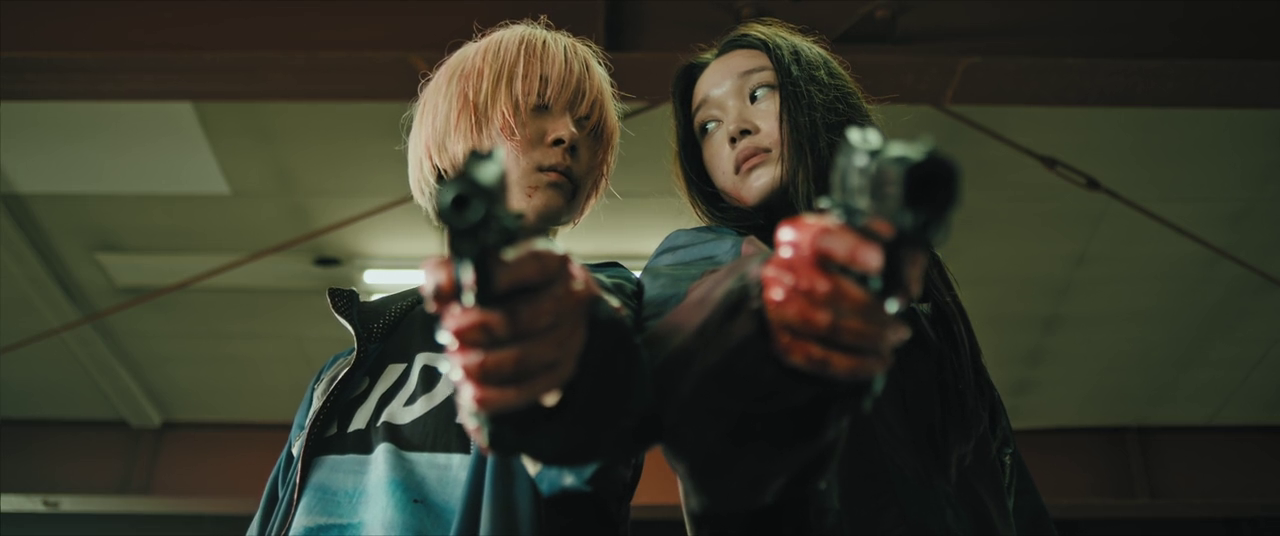
The worst one can say of Yugo Sakamoto's successful sequel to his lovably dopey crime comedy is that its dramatic postures and casual lulls are almost as annoying as those of its predecessor. Otherwise, this faster, funnier, meticulously choreographed follow-up is both more tolerable at its worst and entertaining at its best. No less frivolous at 18 than ever, voracious, chatty, cohabitating contract killers Chisato (Akari Takaishi) and Mahiro (Saori Izawa) are suspended by their guild after balking a bank robbery and failing to pay insurance and gym fees that are years overdue. If their ill-fitting, part-time jobs don't kill them, freelance, fraternal hitmen (Joey Iwanaga, Tatsuomi Hamada) who've designs on the girls' full-time contract may instead. Sakamoto's poor pacing and propensity to belabor his humor are his worst faults, and here much curtailed: most of his scenes are reasonably brisk, and his ratio of laughs to groaners has never been better. Moreover, his refreshing partiality for wide, long, often full-figure shots demands more from both he and his players in both comedic and combative situations. Bleached, boyish Izawa and imposingly handsome Hamada are reliably understated foils to the blaring goofiness of stunningly cute Takaishi and flailing Iwanaga until a climactic fistfight that puts both of them through their humorous and pugilistic paces. Sakamoto is truly making the best dumb movies in Japan; despite its overt and mostly deliberate idiocy, his second outing with these ladies is shot, cut, and played very well, albeit a few exceeding meters over the top.
=]=:< <"Oh my fucking god, why do you like this crap?! You drone on and on about how stupid shit is progessively more prominent, but you actually enjoy Sakamoto's movies? What next, a positive review for some smarmy dump that Joss Whedon took?"
I don't recall anyone here uptalking anything comparable to, "Uhh, you didn't just say that?" or "He's....right behind me, isn't he?"
=]=:< <"Girls are fighting with guys in this, and suddenly that's okay."
Izawa is virtually a guy. Annusya thought she was a guy. Come to think of it, maybe Izawa is a guy.
=]=:< <"I won't pretend that some of this isn't funny, but this is an awfully generous evaluation for something so dumb just because that Akari chick is your type."
I don't have to tolerate these vicious half-truths.
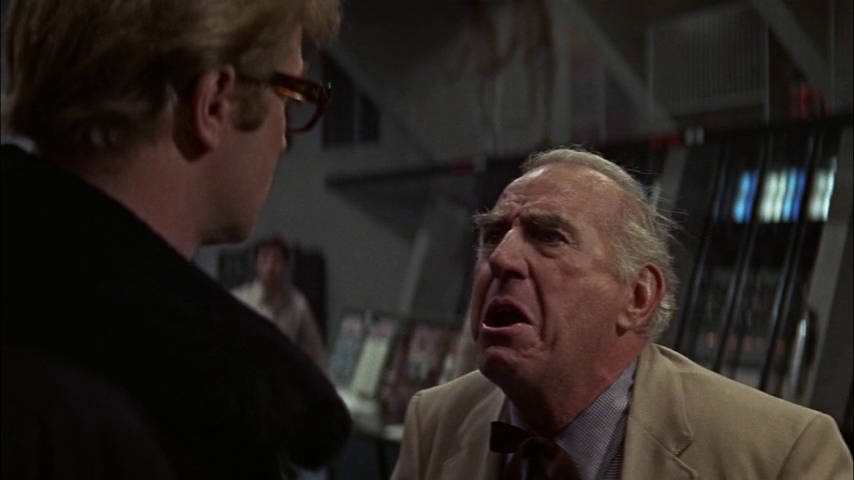
As a private detective, work isn't sufficiently regular for former MI5 field agent Harry Palmer (Michael Caine), so he leaps at the opportunity for a quick commission when a computerized phone call instructs him to transport hermetically sealed, virally contaminated eggs to Helsinki, where he's met by a dubious Russian (Françoise Dorléac) freshly wed to an American spy (Karl Malden) who he'd befriended years before, and who's employed by an unhinged oil mogul (Ed Begley) whose apocalyptic, anti-Communist organization is remotely directed by that titular complex of Honeywell computers. His competent yet distanced and noncommittal direction faintly betrays Ken Russell's discomfort with John McGrath's script adapted from Len Deighton's nearly eponymous novel, but the ill-suited maverick nonetheless effectively exhibits his star cast, who couldn't salvage Harry Saltzman's lavishly produced adventure in espionage from failure for critics and audiences who cottoned neither to its convoluted plot nor friendliness with Soviet authorities, mostly personified by one of the KGB's colonels (Oscar Homolka). It's nathless worth watching as the third and most generously budgeted of the Palmer series; Caine would return to the character nearly thirty years later in Bullet to Beijing, then Midnight in Saint Petersburg. At the brink of an international stardom later enjoyed by her sister, Dorléac was mysteriously assassinated weeks after principal photography wrapped.
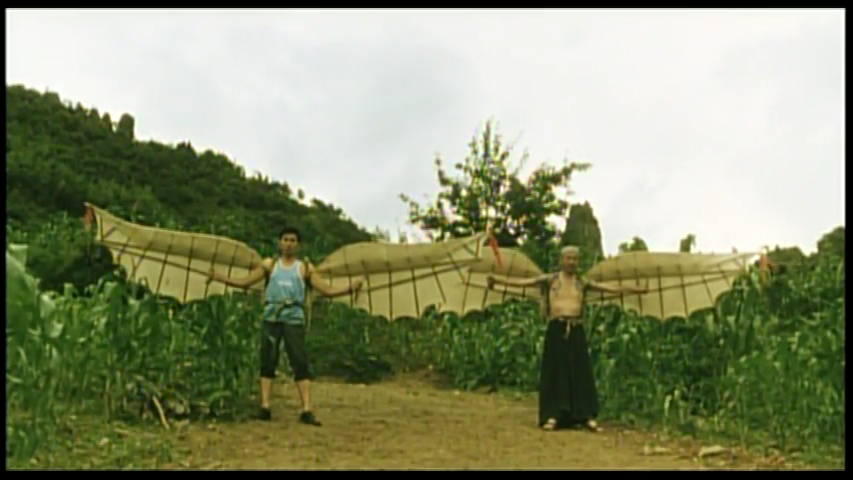
Dispatched by his company to an isolated village in Yunnan to investigate the potential of a jade vein there, a young businessman (Masahiro Motoki) is accompanied by his bilingual guide (Mako) and a brutish yakuza (Renji Ishibashi) whose family is a creditor of the aforementioned firm's debts. They find what they're looking for, but much more: a local culture that may have mastered flight, the legacy of a foreigner who preceded them by over a semicentury, and new convictions expressed both conservationally and destructively. Few of Takashi Miike's many movies recall those of his instructor Shohei Imamura, but his adaptation of Makoto Shiina's novel scripted by Masa Nakamura bears more than passing resemblance to the New Wave pioneer's lusty, rumbustious, rural pictures. No simple moral tale in advocacy of ecology, Shiina's story explores both the negative and positive aspects of traditional and modern life, of technology and its absence. Mountainous and forested Chinese landscapes serve as beautiful backdrops to some fine performances; Ishibashi is a grandmaster of unsympathetic portrayals, and here fleshes an alternately loathsome and piteous thug with tremendous verve. Funny, sober, often wistfully sad, Miike's oddity is a departure from his usual genre fare, in which cosmopolitans probe quiet secrets never meant to be known.
=]=:< <"Obviously, this one needed some alligators to complement the giant tortoises. Miike could've shot an alternate ending in which Ishibashi gets eaten."
That's weirdly plausible.
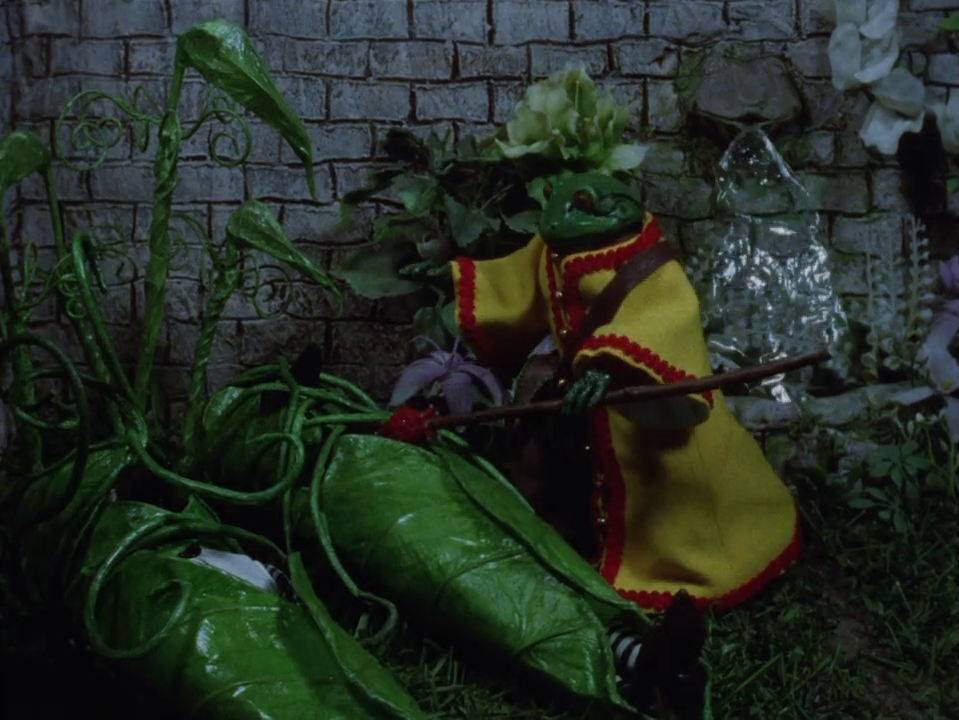
She needed 13 years to complete it, but Christiane Cegavske's eerie, enchanting, speechless, stop-motion fantasy was well worth its production's prolongation. Anthropomorphic, aristocratic, voluptuary mice commission furry, beaked craftsmen to fashion a pretty, womanly, life-size doll for their companionship. Enamored with their creation, the artisans refuse and reimburse the rodents, who then filch their mutual cynosure by moonlight. On a quest to reclaim her, the naive journeymen contend poorly with strange dangers, and are rescued and succored by a ranine wizard, but ensuing misfortunes contrast their gentle, natural harmony with the mice's wanton sensualism. It unfolds like a surrealist reinterpretation of Beatrix Potter's idiom, but this is a trifle too creepy for kids. However, the beauty, sweetness and imagination of Cegavske's vision are as intriguing as touching.
=]=:< <"Why is the spider Holly Hunter in The Piano?"
That's one of that hussy's reincarnations.
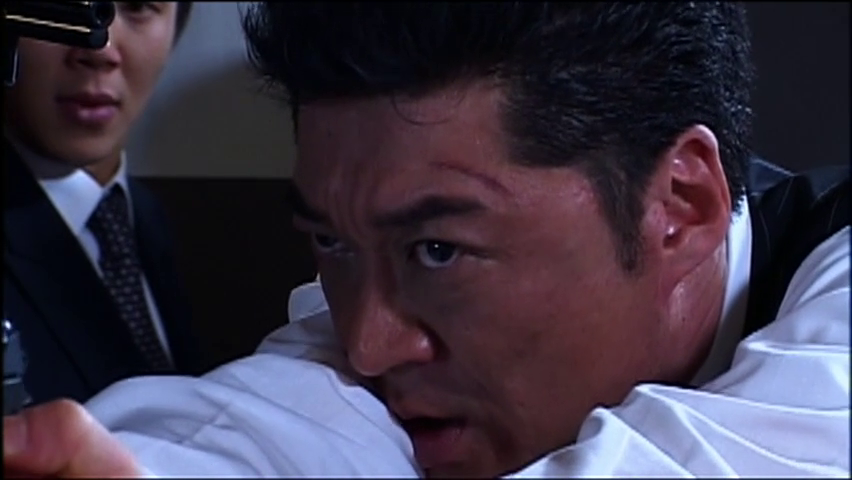
On the brink of poverty, a whilom yakuza and compulsive gambler (Hitoshi Ozawa) is granted by his stratified baby brother (Kazuyoshi Ozawa) an opportunity to reverse his fortunes by assassinating a rival mob boss. When the sincere but fumbling spendthrift botches the hit spectacularly after squandering his advance on women and wine, his sibling decides that he's expendable, and comes to discover that the aging gangster has a surprising instinct for survival. A mainstay who's played scores of heavies from the mid-'80s through the teens, character actor Ozawa optimized his rare lead in Atsushi Yamamura's cheesy, funny, barely budgeted but energetically entertaining video, which isn't too precious in concern of logic or realism to relate its strepitent vengeance.
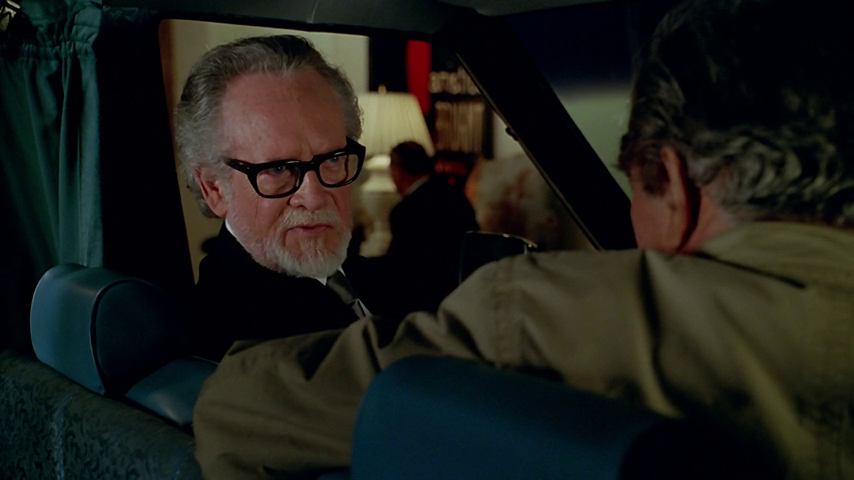
Their quiet affair ended acrimoniously years before, so a muckraking, televised reporter (Rue McClanahan) is delighted to discover evidence of a high-profile theft committed by a successful, expatriate mortician and entrepreneur (Patrick McGoohan) early in his career. Her taunting confrontation with that wily undertaker to Hollywood's stars provokes him to murder the jilted gossipmonger and incinerate her remains as he would any other corpse passing through his parlor, but neither a seeming absence of evidence nor an alibi provided by his widowed lover (Sally Kellerman) deter the rumply, pesteringly pertinacious old detective (Peter Falk), who has to establish that a crime was committed nearly twenty years ago to solve another that happened last week. Teleplaywright/director/co-star McGoohan's last contribution to this series finds him as sharp and curt as ever in all three capacities, and his progressively agitated conversational dodgeball with Falk is as enjoyable in this late episode as it was thrice before. Also amusing are numerous familiar faces in colorful parts: bewildered, assisting police sergeant (Richard Riehle), disgruntled window (Edie McClurg), the murderous mortician's unflappable coadjutor (McGoohan's daughter, Catherine), and a cinephilic shiek (Richard Libertini) who politely confirms one of canny Columbo's many suspicions. Age is truly but a number; late in their respective careers, these two geezers navigated their material and one another as adeptly as ever.
=]=:< <"I'd suggest that McGoohan should've fed Blanche's bloated, delicious old corpse to some alligators, but Columbo probably would've found her purse in a big shit or something. You just can't get around that guy. Anyway, he should've fed Blanche's bloated, delicious old corpse to some alligators."
Huh.
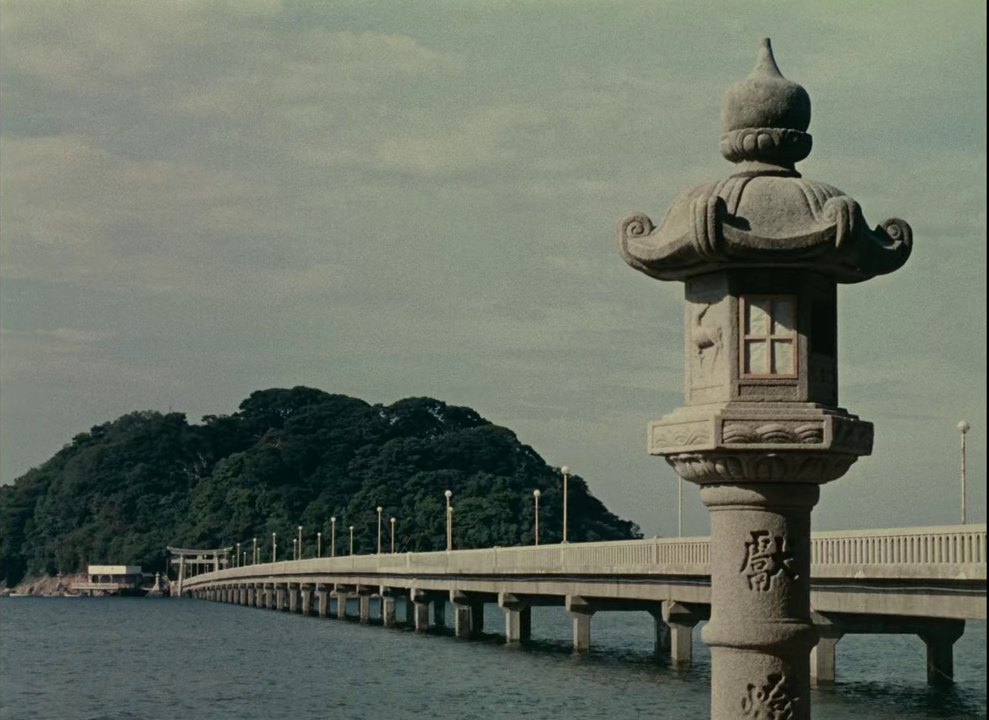
Equanimous when helping an old friend (Chishu Ryu) resolve a conflict with his wayward daughter (Yoshiko Kuga), an affluent businessman (Shin Saburi) is disturbed to learn that his own (Ineko Arima) is betrothed without either his approval or arragement to an upright, respectful, but otherwise unfamiliar young man (Keiji Sada). He interprets her secrecy and selection as betrayal, but his stalwart paternal love and pressure from his adoring wife (Kinuyo Tanaka) and his daughter's pert friend (Fujiko Yamamoto) may guide he and his reciprocally wounded offspring to rapprochement. Ozu's first color film was so shot at Shochiku's behest to showcase ascendant superstar Yamamoto, who's charmingly radiant in her supporting role. Beautiful backdrops of reconstructed Japan's postwar splendor are at least as stirring and significant as those gracefully recurrent themes of receding tradition and familial troth adapted by Ozu and Kogo Noda from Ton Satomi's staid novel. Those familiar with The Painter's spare, static compositional perfection and sedate approach to domestic drama will know what to expect, savor, and cherish from this first among his last series of masterworks.
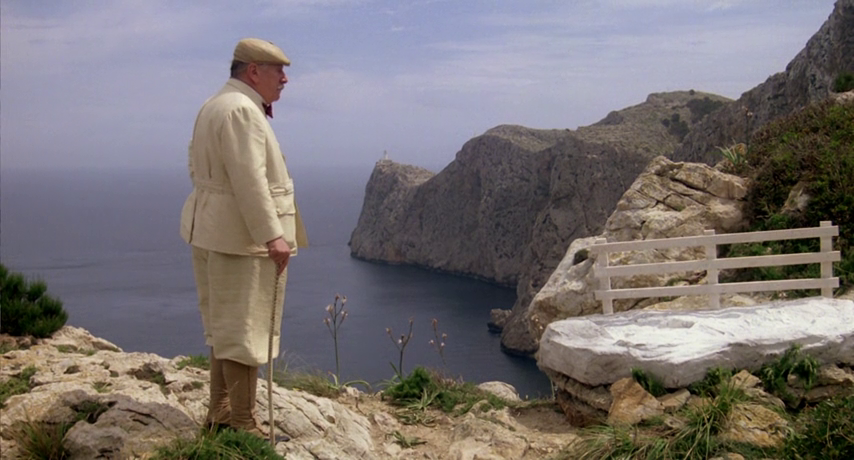
Her vacation at a sunny, insular resort finds an arrogant, abusive actress (Diana Rigg) no less than usual an object of desire, avarice, scorn, and rancor; when she's found strangled on a beachy bay, nearly everyone present -- her husband (Denis Quilley), stepdaughter (Emily Hone), biographer (Roddy McDowall), sometime, spousal theatrical producers (James Mason, Sylvia Miles), millionaire ex-master (Colin Blakely) from whom she swiped a valuable diamond, erstwhile, bested rival (Maggie Smith) and proprietress of the resort, a handsome playboy (Nicholas Clay) with whom she'd probable assignations, and his diffident and aggrieved wife (Jane Birkin) -- had ample means and motive, but no evident opportunity to kill her. Fortunately, overfed, Belgian private detective Hercule Poirot (Peter Ustinov) is available to extend his investigation of the purloined jewel by probing the potential culprits on holiday with faculties of observation, interrogation, intuition, and deduction to rival those of Sherlock Holmes. EMI's follow-up to its superb Death on the Nile doesn't match the grandeur, excitement, or intrigues of that superior offering, but it's at least as witty and knottily perplexing, transposing Christie's sublime murder mystery from Devon to the exotic Adriatic. For his second of six outings as Poirot, Ustinov stresses his sleuth's Wallonian hauteur, joyance, and sympathy, and seasoned comic timing underpins his and bitchy Rigg's persiflage with their co-stars, especially chatty Smith and sniffy Mason. Neither the most nor least of Poirot's onscreen adventures, it's nonetheless picturesque, summmery, beautifully costumed by returning designer Anthony Powell, smoothly and transparently managed by genre veteran Guy Hamilton, and as mystifying though funnier than the novel, thanks to Anthony Shaffer's idiomatically Attic adaptation. For anyone fond of Christie's cinematized stories, this isn't an optional movie.
=]=:< <"You know, if they'd--"
Yeah, I know: they should've fed Rigg to an alligator or crocodile.
=]=:< <"I was just about to say that it wouldn't work dramatically or culinarily. She's too lean and stringy."
Oh, I see. Excuse me.
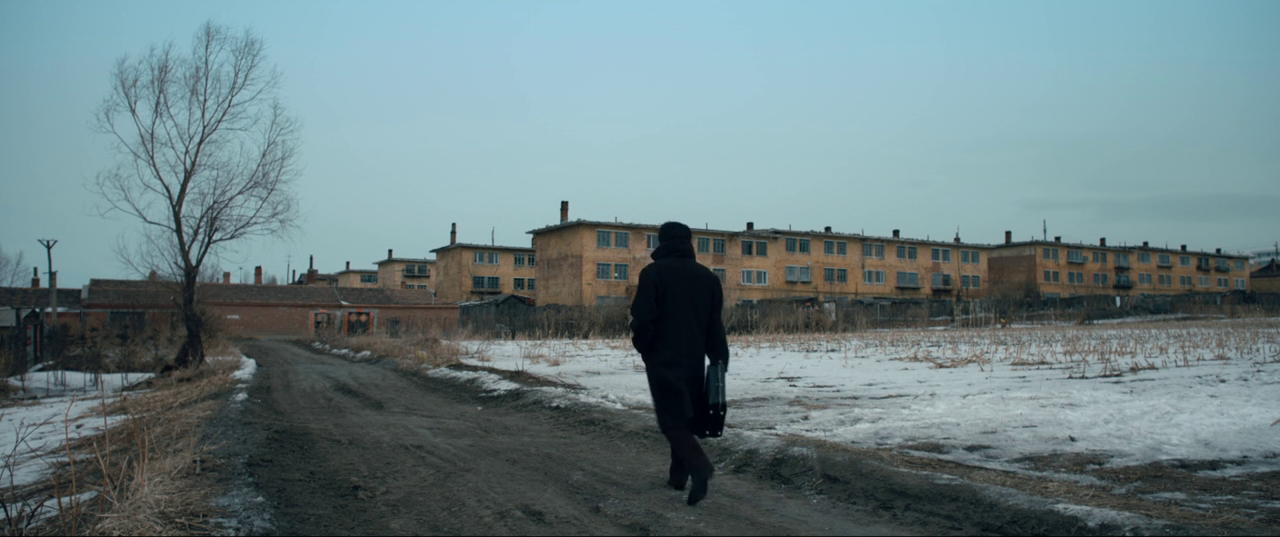
To a small, largely abandoned industrial village in remote Heilongjiang comes an impassive crook (Zhiyong Zhang) posing as a soap salesman, whose mysterious bars render those who sniff them unconscious. Perils and surprises ensue his increasingly entangled interactions with an apparently unfortunate monk (Gang Xu), one corrupt police officer (Weihua Wang), an unfortunate arborist (Baohe Xue) from whom he's renting a room, and others. Quietly deliberate and never dull, Jun Geng's deadpan depiction of life at rock-bottom in his and Zhang's desolate northeastern provenance demonstrates how penury, isolation, and anomie inspire cameraderie and criminality alike. Highly recommended for enthusiasts of black crime comedies and austere, meditative movies.
=]=:< <"He's basically you if you were Chinese and homeless."
You're not far off.
Paul's Newman's fifth and final directorial effort is also the second cinematization of Tennessee Williams's seminal memory play; though it's far more faithful than Irving Rapper's happily concluded feature of 1950, its somber tone seldom admits of the indignant passions that made Williams's classic an enduring success. A warehouse's laborer (John Malkovich) who aspires to authorship and his shy, hobbled, reclusive sister (Karen Allen) live unhappily with their overbearing mother (Joanne Woodward), a onetime Southern belle whose pleasant, often dubious memories are outnumbered by regrets. To allay her hopes of a suitor for her daughter, the frustrated but well-intentioned son invites a co-worker (James Naughton) for dinner, but nobody's expectations are satisfied. Excellent performances (esp. those of Allen and Malkovich) and competent staging can't compensate for the dearth of fire in a production that's more reverent than dynamic.
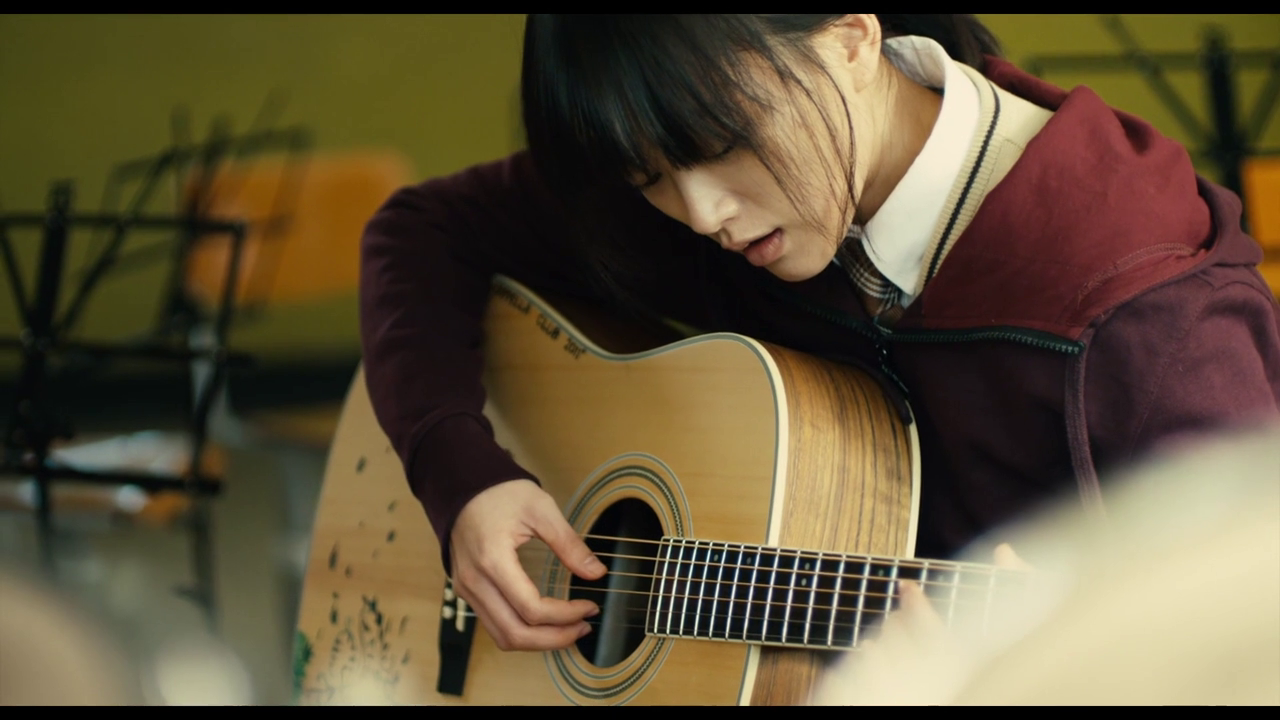
It drags its weepy audiences to the very precipice of melodrama, but Su-jin Lee's tragic tearjerker about the victim (Woo-hee Chun) of an infamous gangrape never quite takes that maudlin plunge. Quietly transferred to another school to avoid negative publicity and the abuse of her rapists' parents during their trial, the traumatized teen gradually applies her musical talents and reluctantly opens herself to new friends in a peppy schoolmate (In-sun Jung) and the mother (Young-lan Lee) of a friendly former teacher (Dae-hee Jo) who takes her in, but can't connect with either her alcoholic father (Seung-mok Yoo) or unloving mother (Yeo-jin Sung) any more than she can elude her past. A series of infamous gangrapes in Miryang, judicial leniency afforded its perpetrators, and the outrageous maltreatment of their victims by police during the aughts inspired this rare independent success in the thoroughly corporate South Korean market, which vividly, anachronically depicts how parental and institutional dereliction destroy the lives of struggling, victimized adolescents. Reticent Chun and her livelier co-stars are roundly terrific under Lee's skilled initial direction, which is as polished as his screenplay that treats of crimes and consequences with an observational bluntnes softened by compassion.
=]=:< <"Too bad a heroic crocodile wasn't there to swim in and sa--"
Shh! Besides, that's ridiculous.
=]=:< <"I didn't finish my sentence."
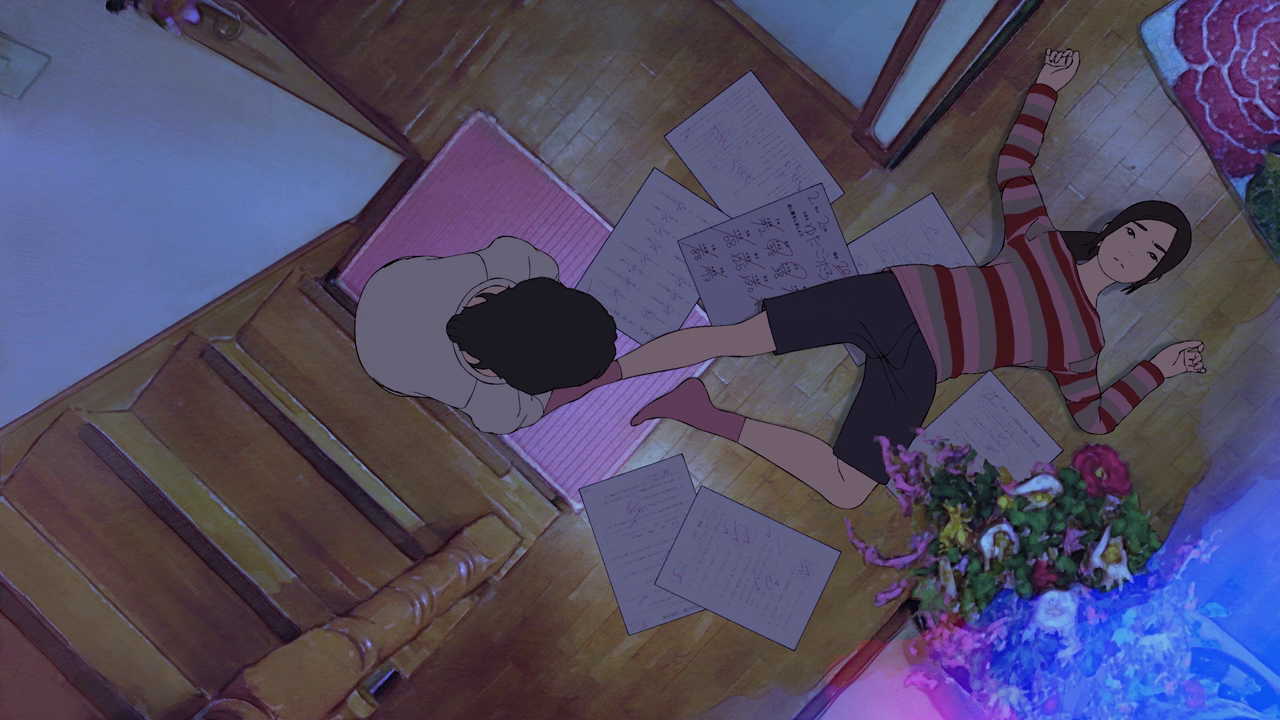
Too old to believably play teenagers a decade later in a conventional picture, Yu Aoi and Anne Suzuki reprised their roles as the bumbling friends in Shunji Iwai's rotoscoped prequel, which animates its players against prettily painted immobile and parallax backgrounds. Inquisitive "Alice" (Aoi) relocates from Tokyo with her flaky mother (Shoko Aida) to a quieter locale; when she's assigned one of two seats considered haunted by the spirit of a reportedly murdered upperclassman, she's determined to uncover the actuality of what transpired. This requires the support of her secluded neighbor Hana (Suzuki), who's part of the mystery. Don't expect the ingenuity that Iwai invested in the first picture, but his charming, frequently hilarious, antecedent follow-up leads his lovable little ladies on an adventure to which friendship is the ultimate discovery. A comedic highlight of Iwai's Ghost Soup and Love Letter a score before, Ranran Suzuki is immediately recognizable and still spunkily funny as a classmate who bamboozles her peers with mystic pretenses.
=]=:< <"I know you're in love with Yu Aoi or something so you can't see this, but Suzuki is actually funnier than either of them."
Actually, I agree completely with that.
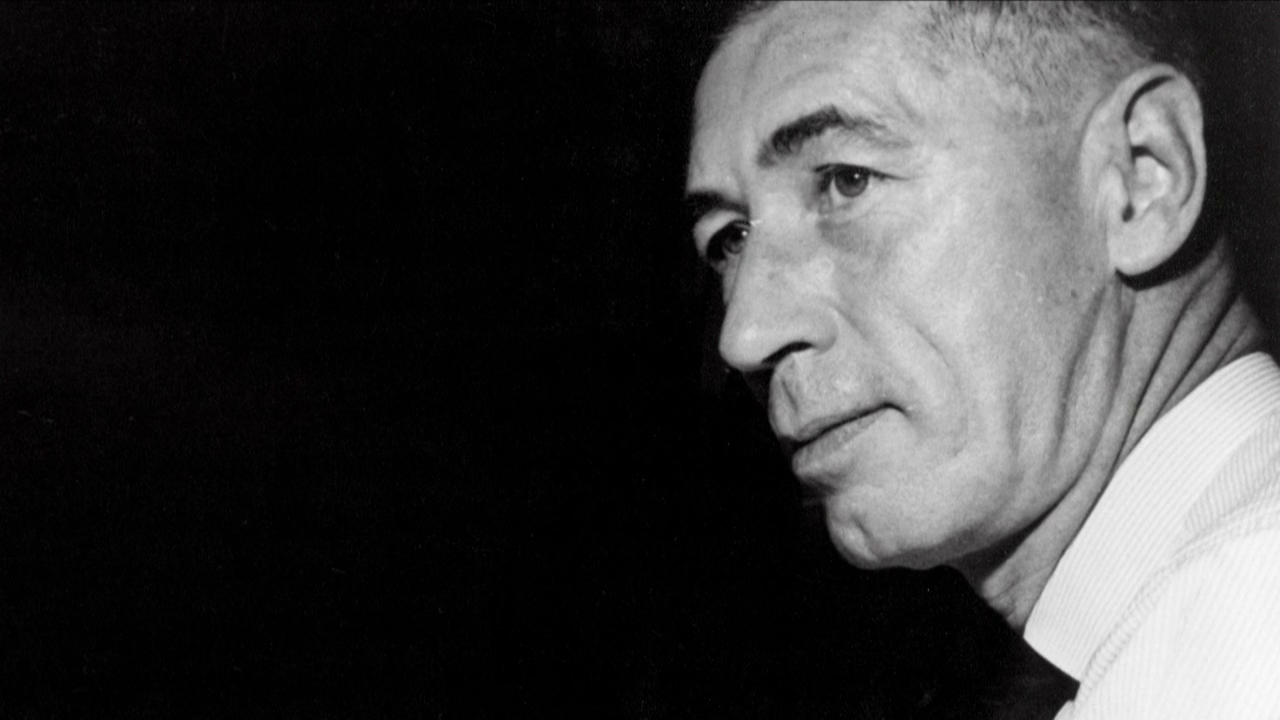
Overscored yet affectionate Franco-Belgian biography of iconic Belgian cartoonist and modern art collector Georges Remi is slightly less a conspectus of his life than that of his career, simply refined style, vast popularity and influence, and the adventures of his globetrotting boy reporter. It's more valuable for details concerning publication of Hergé's strips and albums than its vapid political commentary. As an introduction to the cartoonist and his world, it's quite serviceable; his devotees may find it dull.
=]=:< <"This is bullshit: lots of babble about Hergé's niglets and nazis or whatever, but nothing about how this son of a bitch depicted alligators."
I'd say his portrayals were pretty accurate.
=]=:< <"Not one of us gets a single line!"
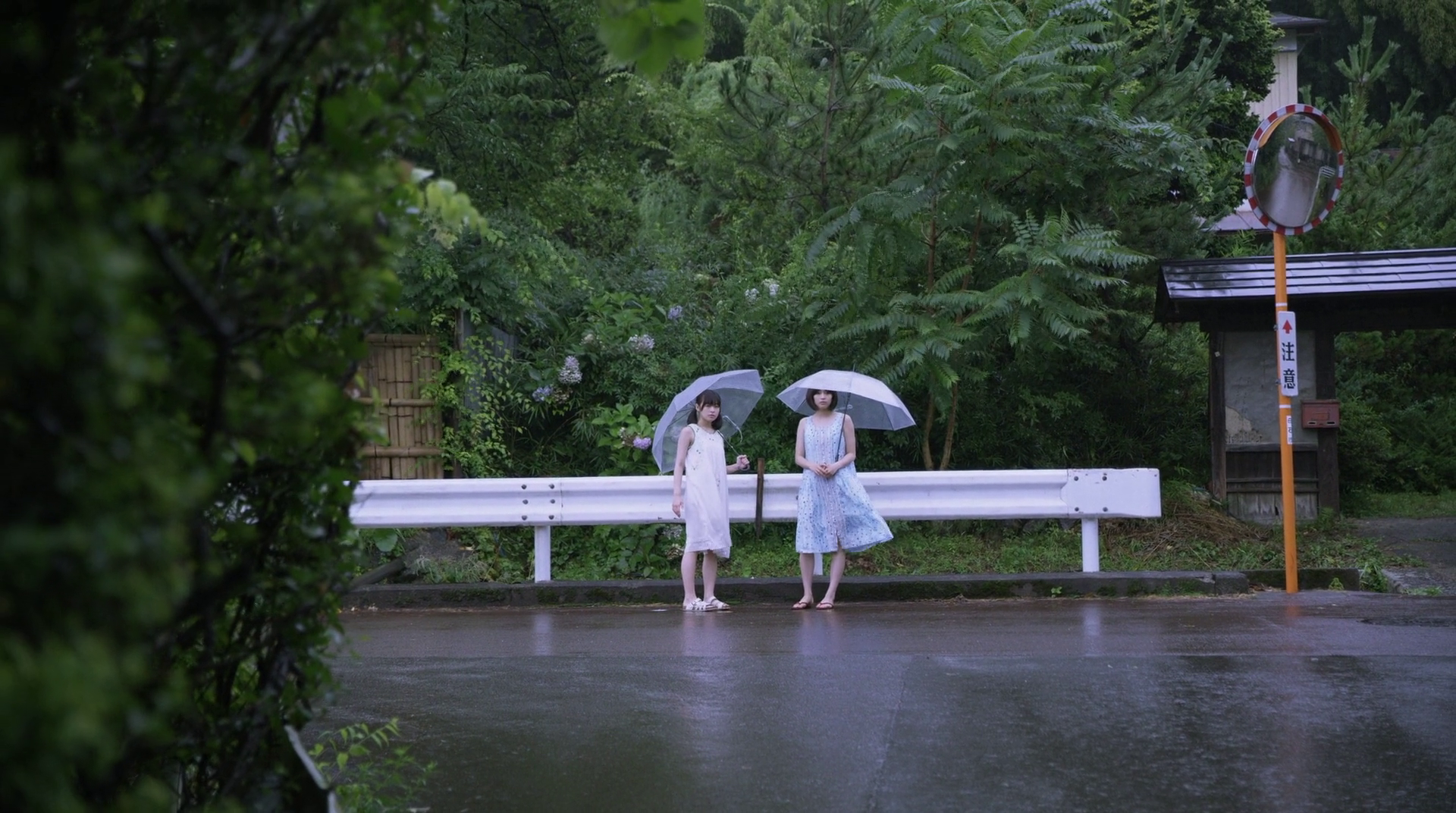
At an alumnal reunion, the sister (Takako Matsu) of its graduating class's beloved valedictorian hasn't a moment or the heart to explain that she's not her late sibling. That librarian's approached thereafter by the author and schoolteacher (Masaharu Fukuyama) on whom she'd crushed as a teenager (Nana Mori) before he (Ryunosuke Kamiki) had fallen in love with, then immortalized her prettier, popular big sister (Suzu Hirose) in an acclaimed novel. While her daughter (Mori) and grieving niece (Hirose) bond during summer break at their grandparents' home, she writes longingly yet aimlessly to him as her sister, sans return address. His eventual reply to her old address is keenly received by the affectionate cousins, who also correspond as the decedent, prompting him in confused curiosity to seek out and confront her, then her sister's abusive husband (Etsushi Toyokawa) before oncemore visiting their whilom, derelict high school that's slated for demolition. Beautiful, gently wistful, but ultimately inferior to its Chinese predecessor, Iwai's second, Japanese adaptation of his novel hasn't the ardor, urgency, or successive surprises of the first. Iwai's camerawork is more relaxed to suit this picture's languid pace and summery period, in contrast to the intense focus, measured momentum, and autumnal austerity of his prior pic. Just as both Letters recall Love Letter's superficial similitudes as emphases of substantial dissimilarity and the amorous value of nostalgia discerned in dolor, so too is the latter a means for Iwai to redirect past collaborators. Sprightlier in her early forties and as charming she was in April Story, Matsu's a fine obverse to Xun Zhou in the ingenuous lead. Her husband was rewritten as a mangaka to be played by Hideaki Anno, who's able but as uncharismatic as ever in that small part. Protean Toyokawa's acerbic interpretation of the wretched reprobate is slightly more memorable than than the role as created by younger Ge Hu, and Miho Nakayama slums convincingly as his weathered, pregnant second wife, cleverly cast against type. That character and an amusing (though purposive) aside concerning a suspected affair of the protagonal librarian's mother-in-law (Midori Kiuchi) are exclusive to this movie. His refusal to reshoot this identically is admirable, and its Japanese players and settings are more photogenic than their Chinese counterparts, but there's less craft invested and effect resultant here than there was two years' prior. By any other standard, you'll only see so many dramas that are so lovely to feel and behold.
=]=:< <"I like this one more. It was really relaxing while I was gnawing some flesh from the bones of a dead politician's half-rotted carcass."
Where'd you get that?!
=]=:< <"Uhh....n-nowhere!"
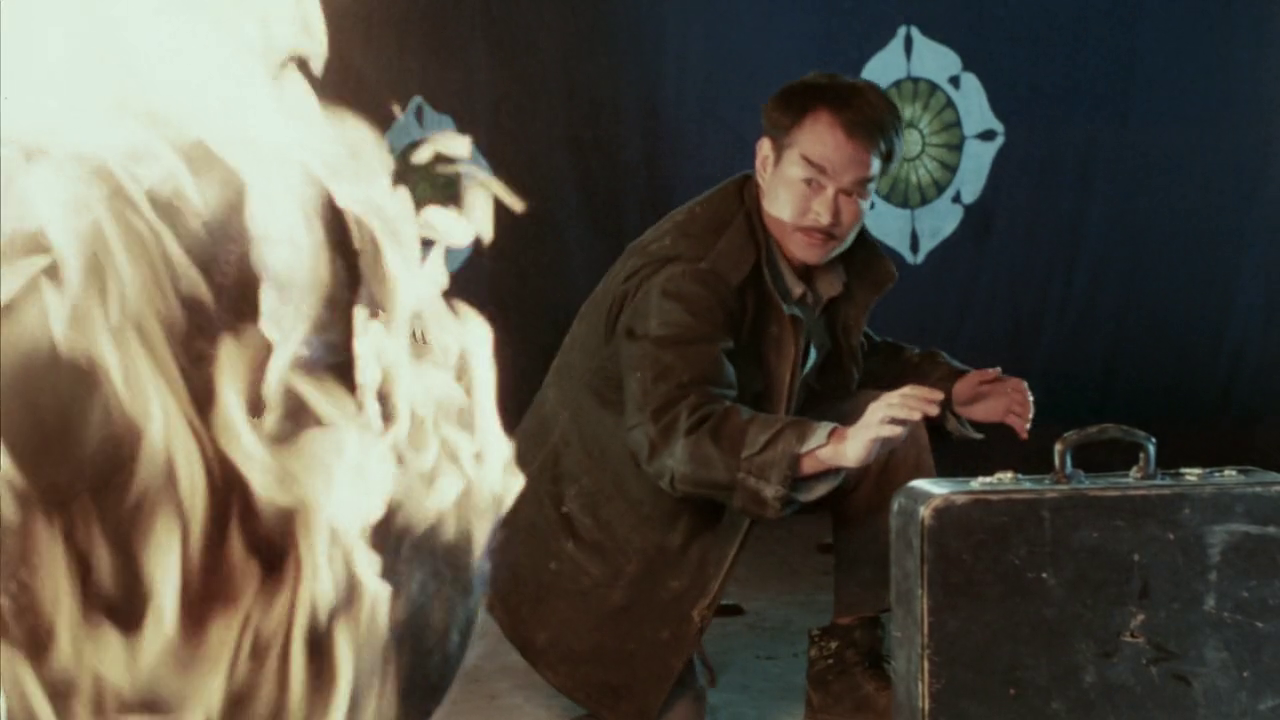
A Japanese sorceress (Michiko Nishiwaki) successfully smuggles drugs on Hong Kong Island by remote manipulation of zombies as couriers; before her gruesome apprehension, an undead stewardess (Yuk-Hang Wong) so guided was the daughter of a neighbor to one Taoist magician, constable, and martial artist (Ching-ying Lam), who travels from Tung Ping Chau to recover the remains of the deceased, protect his cute niece (Mei-Wah Wong), and drag two gawky sergeants (Wilson Lam, Michael Miu) from one clue to the next while investigating the villainous witch with equally arcane aeaeae. Fifth entry in the popular Mr. Vampire series boasts copious comedy, exhaustive and first-rate combative choreography by Chi Kit Lee and star/co-producer/stunt coordinator Lam, practical effects that dazzle even when seams and strings are visible, and sortilegious techniques inspired by Taoist rituals, Chinese folklore, and Looney Tunes. Don't expect a dull or serious moment here -- just pure fun with an energetic Jiangshi piquancy that's more engaging and satisfying than any dozen retreads of Universal's monsters.
=]=:< <"This movie fucking rules!! Too bad Magic Cop is stuck with those two losers instead of a cool, crocodilian sidekick."
This is what I mean: Jews use remakes for evil, not good.
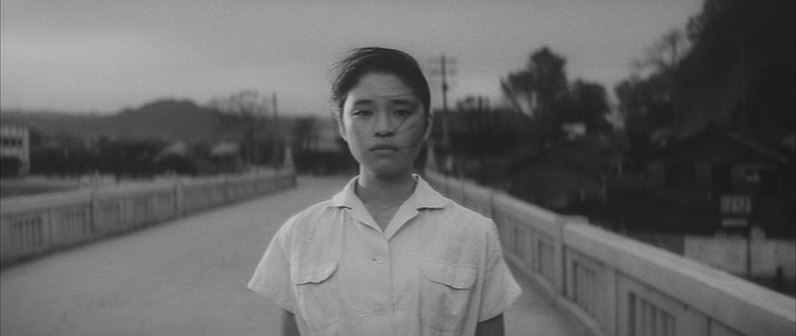
His fourth feature and last to be shot with conventional constraint is a cinematization of a juvenile zainichi's bestselling diary, which directs Shohei Imamura's quasi-anthropological focus to the hardship and community of an impoverished mining town in the early '50s. Their father's death and the local mining company's latest round of reluctant layoffs forces vicenarian siblings (Hiroyuki Nagato, Kayo Matsuo) to migrate to Tokyo and leave their spunky baby brother (Takeshi Okimura) and reflective little sister (Akiko Maeda) first to the care of a familial friend (Taiji Tonoyama), then that of their kindly schoolteacher (the late Kazuko Yoshiyuki), but the bored, restless children seek work and find adventures in the absence of any parental guidance. Good acting and Imamura's grounded approach relate the sober reality of postwar, working-class life at the very bottom, and how little joys and hopes persist in spite of such crushing necessitude. Like his famed co-star Shoichi Ozawa, Tonoyama was a preferred performer of Yuzo Kawashima and his protege Imamura, and later made the most of various roles in several of the latter's posterior pictures.
=]=:< <"Boring."
I thought it was nice.
=]=:< <"Boring. Nobody even got eaten. Not even that raspy old broad."
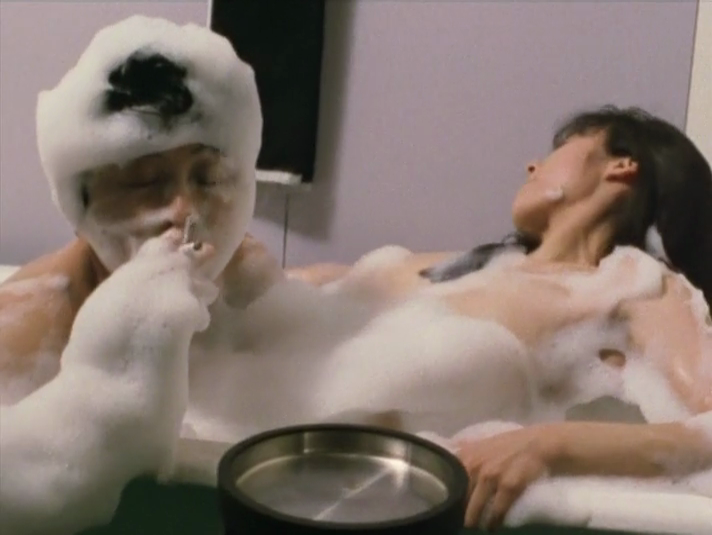
Death isn't easy for a callow, posturing yakuza (Sho Aikawa) who's tasked with a retributive assassination (and probable, subsequent prison sentence) that nobody else wants to perform. All he really wants is to live a gangster's flashy lifestyle with his sweet, busty, hoplophilic girlfriend (Chikako Aoyama) without shouldering its attendant responsibilities. His tough uncle (classic, hyperbuccal heavy Jo Shishido) would prefer that he abandoned the criminal lifestyle entirely, and isn't averse to abusing some of his colleagues in aid of that aim. With almost incongruously stylistic grace, Roman porno auteur Banmei Takahashi made the most of Joji Abe's and Takuya Nishioka's meandering, vicious, lusty, consistently hilarious screenplay, and coaxed from Aikawa (in his very first lead performance) the alternating suave solemnity and spastic wackiness that would make him a superstar of V-Cinema, then mainstream cinema. Ever a fixture of her husband's features, Keiko Takahashi has a brief cameo as a polite chiromancer.
=]=:< <"Ha ha! Sho is fuckin' crazy! I love that guy."
As a fisherman, he's unfortunately your natural rival.
=]=:< <"Yeah, right! I wouldn't venture into seawater if you paid me."
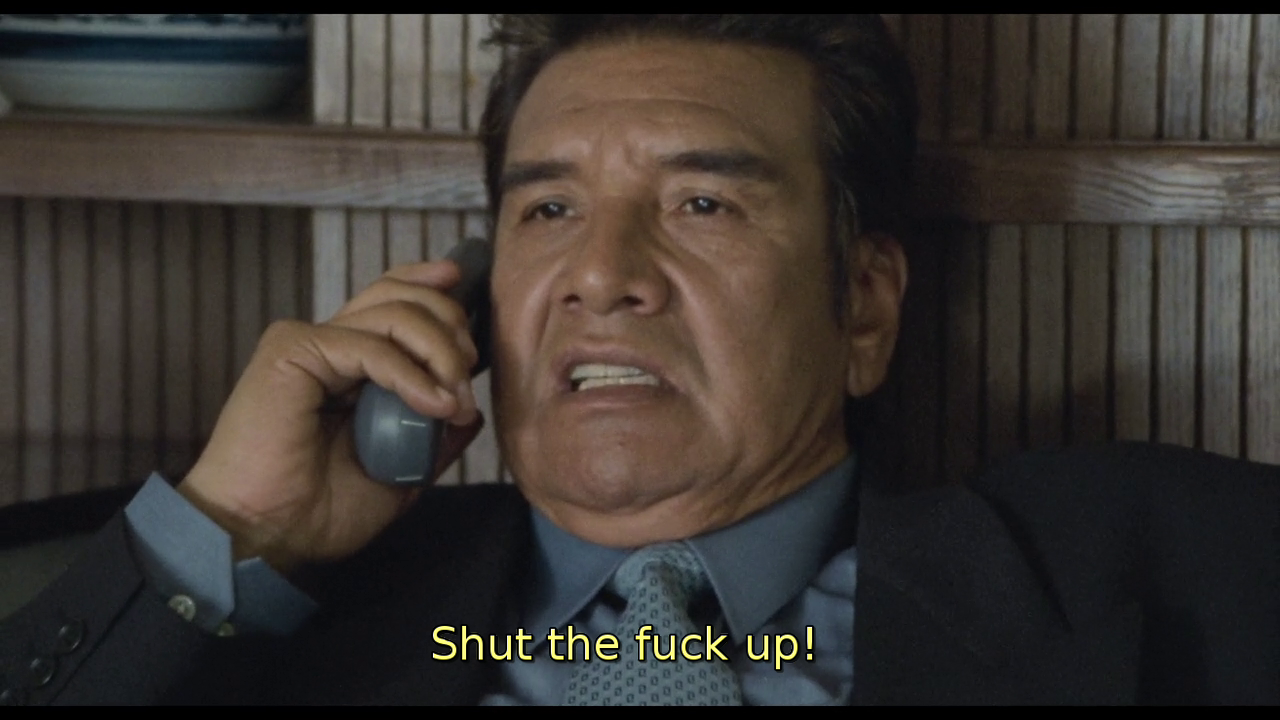
Upon his release from prison, a tough, hotheaded, half-Korean Yakuza (Riki Takeuchi) can scarcely wait a minute to avenge his murdered boss and adoptive father (Yuya Uchida) by assassinating the sleazy, ailing Chairman (Renji Ishibashi) of a rival gang with inadvertently advisable disregard for mediations and machinations meditated to exploit and ensnare him. With his stalwart blood brother (Kenichi Endo) at his side and two Korean hookers (Miho Nomoto, Saki Kurihara) in tow, the wily, rogue hitman is avid to wage war retaliatorily on two crime families and the contract killers (Ryosuke Miki, Yoshiyuki Yamaguchi) who have him in their sights. As it was screenwritten by Shigenori Takechi, Takashi Miike helmed this shatteringly brutal, hilarious, unsentimental crime thriller (that's loosely based on yet more violent exploits in the criminal career of gangster turned screen star Noboru Ando) with the same disregard, if not disdain for any demarcation of realism and outrageously combative fantasy. Scowling Takeuchi rips the flesh of his every scene from its bones in as muscular a portrayal as any that he's tackled, complemented well by Endo as his likable foil. Plenteous graying star power is marshalled in supporting parts: Sonny Chiba is deadpan and enduringly cool as a swaggering, sympathetic police detective; Joe Yamanaka looks and acts the part of a friendly pimp; an elder mob lord is clothed well by typecast Tetsuro Tanba's unsurpassably stony stolidity; in the movie's best performance, the widow of Uchida's slain underboss is played by Lily with a shaded sensitivity that informs her achingly evocative gracility. In lieu of a score, raucous rock songs from the Flower Travellin' Band's second album Satori (sung by Yamanaka and co-produced by Uchida over 30 years prior) compliments the strutting, smashing, shooting onscreen action wildly well. Recommended for anyone who likes his yakuza eiga vicious, meaty, and heartfelt, and required for devotees of prolific Miike's genre fare, or any of the great actors therein.
=]=:< <"Badass! I just wish he'd beat that bluegum to death, too."
Why? He didn't do anything.
=]=:< <"Oh, yeah. Well, he's gross."
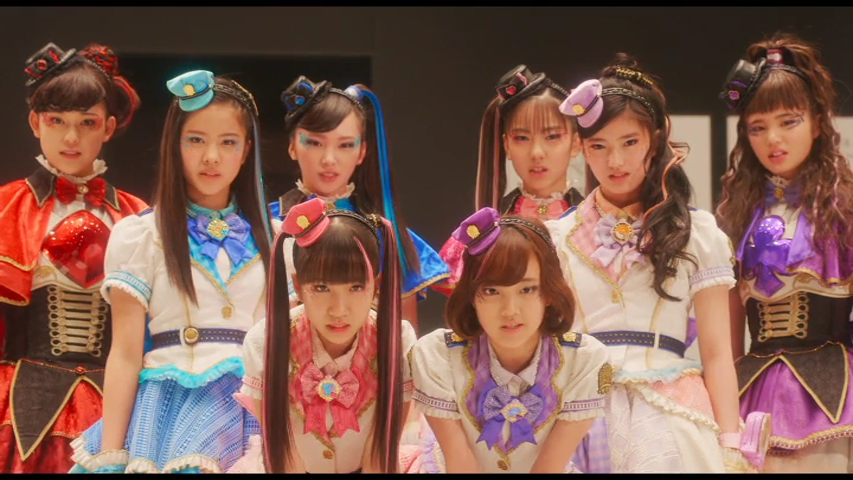
"With Love and a Pat, we will arrest your uncool heart!" declare the cute, frilly, armored heroines (Miyu Watanabe, Rina Yamaguchi, Yui Yamashita, Yura Sugiura) of Takashi Miike's cinematic appendix to the penultimate series of his televised Tokusatsu Girls x Heroine Series. When the quartet of magical girls and the leporine fairy who endowed their witchery are tasked with protecting a treasure known as the Love Diamond from wicked thieves who are conspiring with their arch-nemeses, the bumbling, rapacious Warupyoco Troupe, they've enough time to frequently break into peppy, carefully choreographed song and dance as the series' idol group Lovely Lovely, but may not be clever enough to safekeep that heartful gem. Moreover, who is the pouty boy in a basket wheeled about by their chief inspector (Shingo Yanagisawa)?! Exceedingly fluffy and consistently funny for the entertainment of its juvenile audience and their parents, Miike's squeaky-clean, colorfully costumed and dressed mishmash of lightweight action, zany comedy, puppetry, music, and merchandise delivers with high production values and enough cute and comic happenings scripted by series screenwriter Yoichi Kato. The angular exterior, rooftop, cafeteria, and towering libraries of the Kadokawa Culture Museum, and grounds of Tokyo Summerland amusement park provide picturesque backdrops to Miike's action and drama. Magical ladies of the preceding Secret x Heroine Phantomirage! (Minami Hishida, Kira Yamaguchi, Toa Harada, Ran Ishii) appear in a supplementary capacity. Highly recommended for little girls who like their fun bright, energetic, melodic, and weird.
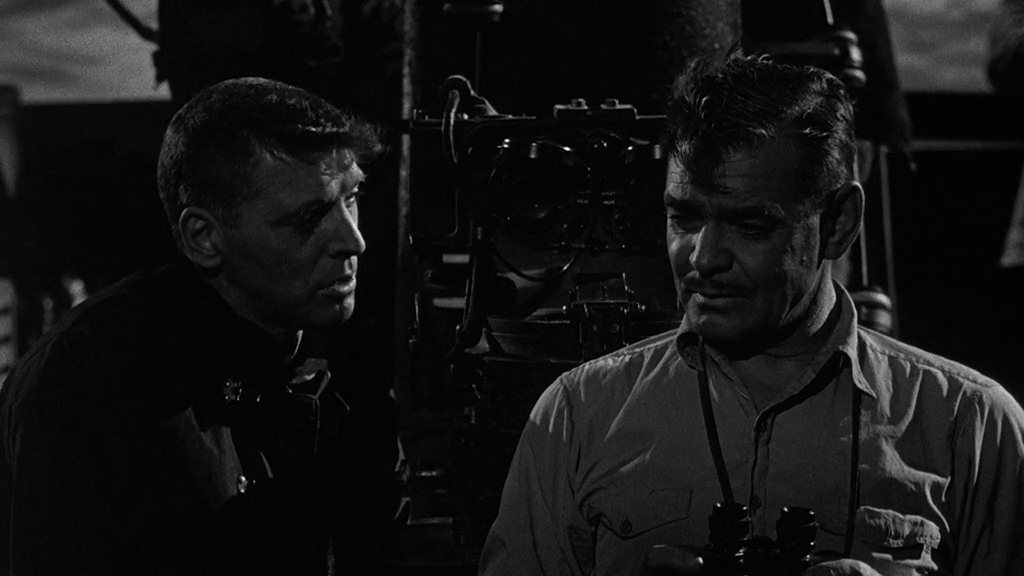
Solid scripting by John Gay adapted from Edward L. Beach's novel, exhaustive consultation with Navy personnel, and painstaking replication of submarine interiors and maritime procedure make Robert Wise's wartime drama the most suspenseful and verisimilous of its sort, not to be excelled until the release of Petersen's Das Boot. Four Naval submarines have been sunk by the Japanese destroyer Akikaze; the surviving commander (Clark Gable) of one is determined to avenge his vessel and its crew, and so assumes command of another sub and subordinates the embittered lieutenant (Burt Lancaster) who was previously nominated to its command as his executive officer. Grueling drills at the behest of the stiffnecked skipper hone his crew to a cutting edge that's required for survival, much less a successful offense, but officers on the occasional verge of mutiny can only guess at their commander's vengeful ulterior motives. Smart, straightforward acting and Wise's workmanlike direction accentuate the tensions of the submariner's service, where cunning is as essential as discipline, and mistakes are fatal.
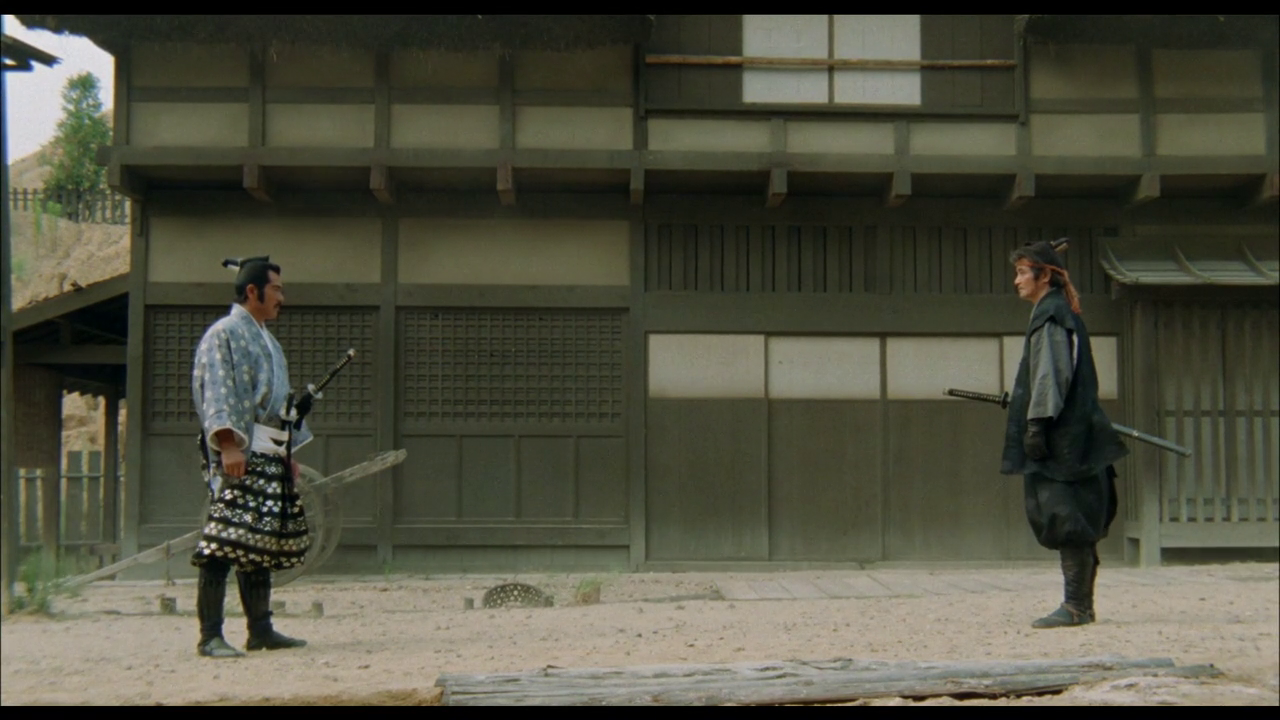
If the firstborn, sickly scion (Ippei Shigeyama) of intemperate, psychotic, dying shogun Iemitsu Tokugawa (Masaki Kyomoto) doesn't survive to attend his ratification at Edo Castle, then the wicked warlord's prime minister (Hiroki Matsukata) will secure the continuity of his position. However, previous attempts on the regal tyke's life that were violently stymied by a ronin (Ken Ogata) and his band of fighters in service to daimyo Masamori Hotta (Tetsuro Tamba) prompts that lord to assign them, his son Masatoshi (Takeshi Maya), and the juvenile master's nurse (Miyuki Kano) as his escorts from Sakura Domain to Edo, a journey that's almost as dangerous for military movement as for the pursuit of assassins led by the prime minister's guard chief (Sonny Chiba) -- a canny, indefatigable master swordsman who's at least a match for the best of men. Toei spared no expense to produce this lightweight yet quality chambara helmed well by ever-dependable Yasuo Furuhata, which showcases the studio's biggest star opposite Japan's most rigorously versatile thespian in the '80s. You'll be hard-pressed to find a chambara that contains more action than Shadow, which is packed with expertly choreographed chopsocky, stunts, swordplay, equestrianism, and explosions, all of which are beautifully photographed by DP Daisaku Kimura. Alas, horrendous chroma keying and shoddy special effects mar a few otherwise gripping scenes. Both for their prodigious screen presence and the typically impressive vesture of costume designer Emi Wada, Ogata, Chiba, Tamba, and Matsukata all feel larger than life, and Chiba's proficiency in kendo braces his believability in numerous scenes of deftly slashing combat. Kyomoto plays the third Tokugawa shogun miles over the screechingly abusive top, which is fun for those who enjoy this as pulp, but possibly insulting for anyone who expected historical fidelity in treatment of the plump, persecuting pederast who he doesn't resemble in the slightest. For those expecting a serious chambara, this isn't it; if you want plentiful photogenic excitement that's farced with silliness, sincere in its condemnation of ruinously corrupt authority, and headed by two classic leading men, this is the one.
=]=:< <"How the shit did Japanese cinema turn into just a bunch of manga adaptations and chicks talking about their relatives? Anyway, this is bitchin.'"
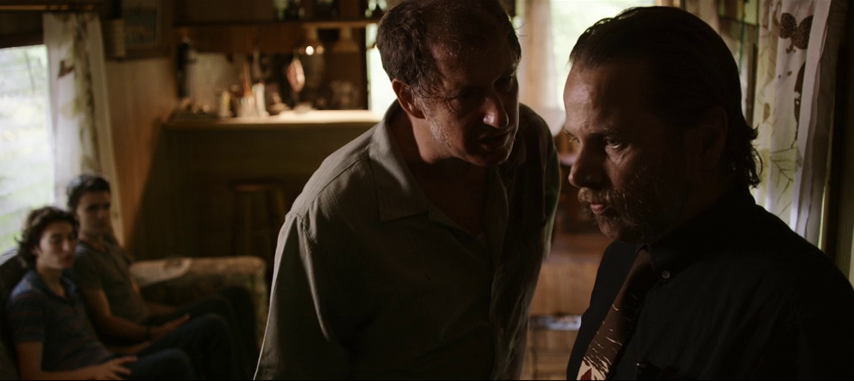
During their summer vacation, teenage friends (Jack Fessenden, Asa Spurlock) are tasked to clean a residential trailer, where they're held hostage by two from a trio of antsy (John Speredakos), trigger-happy (James LeGros), and exsanguinating (Larry Fessenden) felons who are squatting therein following a robbery that ended in a shootout. Captors and captives alike are in for a coincidental surprise that seems to resolve their problems until the arrival of an assassin (Kevin Corrigan) who was sent to retrieve and execute. Writer/director/editor/composer/co-star Fessenden's debut feature is light on plot and heavy with atmosphere that smoothly sways from tranquility to tension with a maturity and deliberation that belies his adolescence. His oversight is so skillful, and his cast of Glass Eye regulars perform with such taut vehemence that one can overlook the dearth of originality in a screenplay that doesn't waste time with needless dialogue or formalities. Nepotism in service of genuine talent often yields good things; mauger the collaboration, connections, and patronage of Jack's semi-famous DP, co-star, and father Larry, he helmed, cut, and scored a better picture at 16 than most from those who are twice his age.
=]=:< <"It's okay, even though Speredakos is way too whiny in this and Blackout."
I liked it, but I won't pretend that Jack F. isn't as dubious as leftards come.
=]=:< <"$40 says you're gonna hate that little crypto prick when he gets out of university."
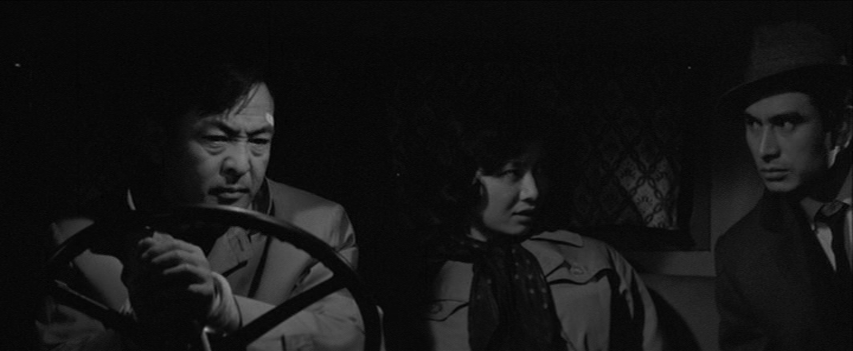
Two of five prisoners transported in a police wagon are killed by a sniper in a carefully planned assault. In his spare time during his formal, succeeding suspension, that Black Maria's rugged guard (Michitaro Mizushima) laboriously investigates two potential leads: a parolee (Shoichi Ozawa) who survived the ambuscade, and the suspicious daughter (Misako Watanabe) of an ailing crime lord (Shinsuke Ashida). A handful of Seijun Suzuki's oddities presage the playful, often surreal invention of his following felonious flicks, but this borderless actioner is otherwise consummately shot by the book, and curious for reliable yet middle-aged Mizushima in the lead. Notwithstanding some needless twists that pad its second and third acts, it's sustained by plenty of excitement punctuated by the occasional quirk.
=]=:< <"What the hell happened in this? What were they up to?"
I forgot.

Good players and production values are the commonalities of this horror anthology's six segments cinematized from a selection of webtoons. Three classmates (Seung-yeon Chang, Seung-hee Oh, Ye-eun Jang) realize their differing desiderata by ritualistically imitating the dance performed in a viral video titled DingDong Challenge, but the cost of their successes is fatal. Abused by her mother (Ho-jung Kim) for her academic underachievement, a highschooler (Eun-soo Shin) is eager to improve her grades by slaughtering and sacrificing no few Four Legged Beasts to a wicked spirit, until she runs short of animals. A desperate debtor (Tae-hun Kim) hit the Jackpot at a casino, so he'll risk anything to keep his newly won cash safe from thieves who surveil the rooms of and a disaster that befalls the hotel where he's lodged. The Residents-Only Gym of an upscale apartment complex has been haunted since a death occurred therein, and neither its Homeowners Association's shrewish president (Ji-na Son) nor the lowly security guard (Kwang Jang) under her thumb can prevent more deaths during exercise. A maimed paramedic (Zoo-young Lee) awakens unexplainably whole but debilitated in an austere facility where her Rehabilitation entails timed activity under the supervision of a stern doctor (Joo-ryoung Kim) who can't and won't explain her circumstances. Gluttony is exploited and weaponized by two streaming personalities: a demure nibbler (Jin-ah Park) who clearly faked her consumption in a edited mukbang video, and the pretty, popular, predatory gorger (Su-im Choi) who invited her on her stream to expose, torment, and humiliate her with a challenge to repeat her feigned feat; a year later, the disgraced devourer returns to invite her rival to a far more demanding competition, and has a few secrets to reveal and conceal. Like their respective casts and crews, all of the directors-screenwriters (Sang-hoon Ahn, Johnny Chae, Yong-gyun Kim, Dae-wung Lim, Eun-kyoung Yoon) who contributed to Studio Toyou's glossy co-production are clearly talented, but the fruits of their efforts are hardly equal. For its plot holes and inanity, The Residents-Only Gym is clearly the weakest among these; DingDong Challenge and Four Legged Beast are pleasing but plainly predictable; more challengingly imaginative are Rehabilitation and Jackpot; a knowing lampoon of unhealthy online trends, celebrities' artifices, and the wanton vanity and viciousness of pampered Korean women, closing vignette Gluttony is clearly the best of the lot. Recommended for Halloween.
=]=:< <"Wow, Koreans are jerks. Gluttony was good, though; I can relate to those bitches."
Me too.
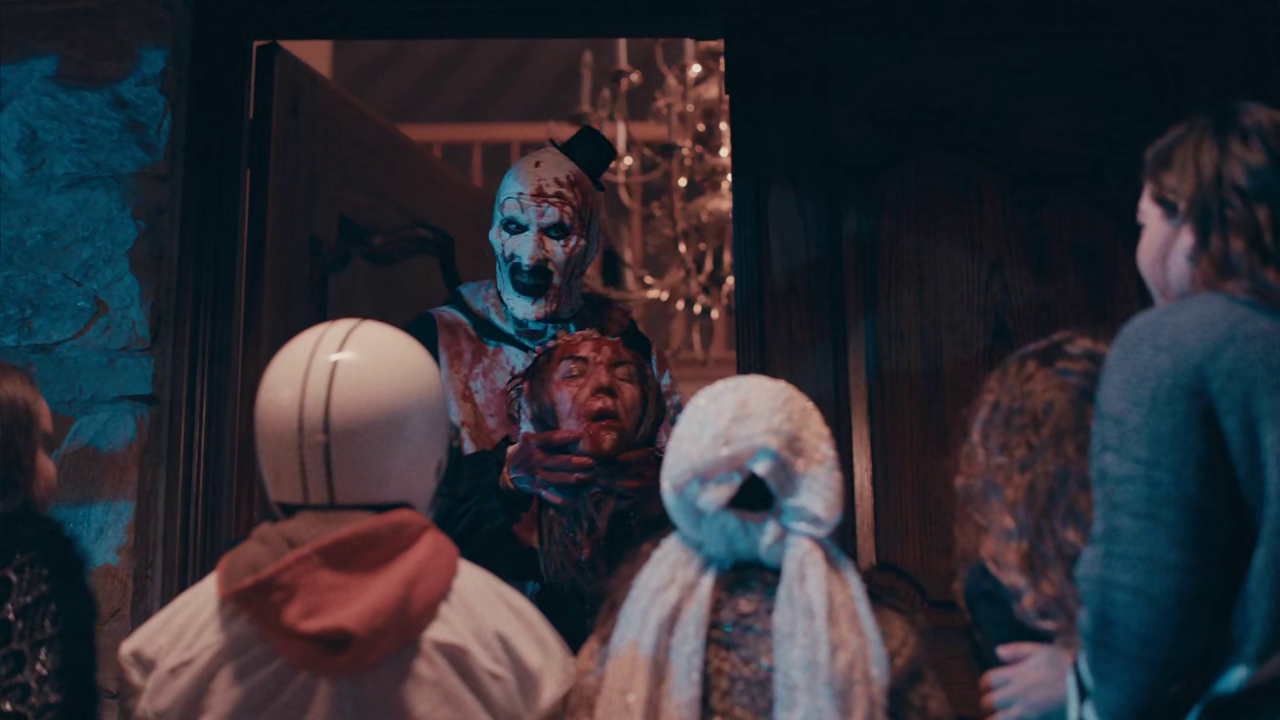
Disregard all claims that screenwriter/makeup artist/director/editor/sound designer Damien Leone's sequel to his horror hit is overlong at nearly 2 hours and 20 minutes, because not a moment of it is wasted in depicting how ghoulish killer clown Art (David Howard Thornton) defies death to reemerge on the Halloween succeeding that when his massacre ended with his headshot to stalk a pretty cosplayer (Lauren LaVera) and her baby brother (Elliott Fullam), whose dead, presumably schizophrenic father previsionarily sketched the sanguineous slapsticker and the little dead girl (Amelie McLain) whose spirit accompanies him. Along the way, he doesn't miss an opportunity to trick, treat, and explore new ways to attack, torture, mutilate, maim, dismember, and pulverize those who he encounters. Funnier, bloodier, and less shocking than its predecessor, it's a fine example of economized spectacle (Leone stretches $250K further than any other living filmmaker) whose implausible scenarios, trashy trappings, and gratuitous gore are staged with technical excellence, recalling slashers of the '80s, yet superior to most of them. Leone's critics aren't highbrow; they simply take his movies more seriously than he does.
=]=:< <"Most of the time, grrl power is just a bunch of posturing and dialogue so edgily bad that Mexico's femicide rate is relatable, but it actually works here. I'd let LaVera ride me around into a fight."
Me too.
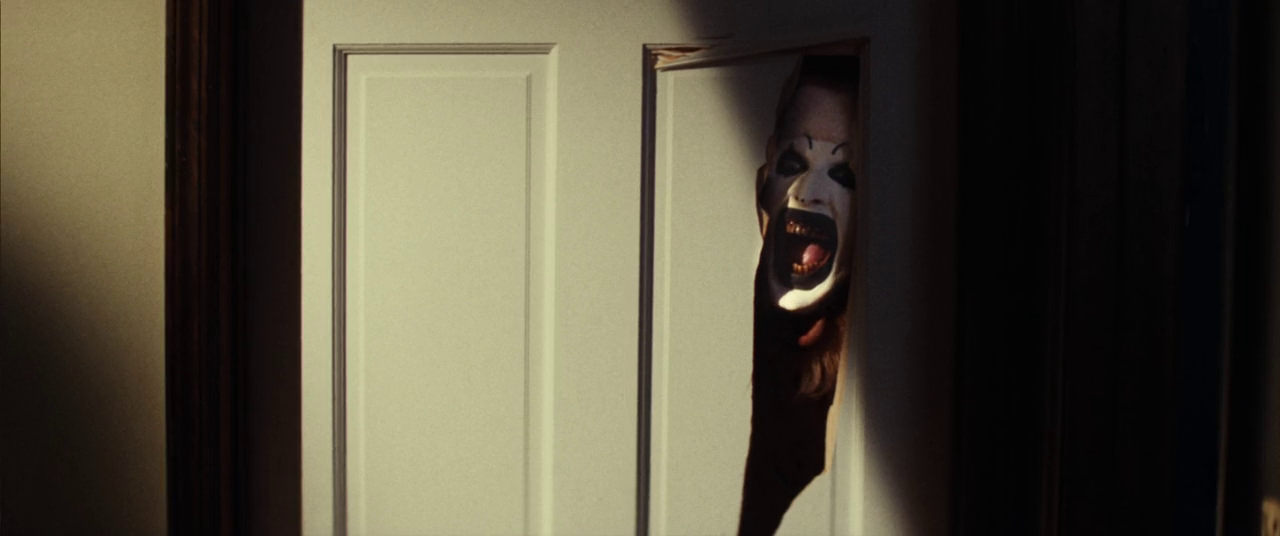
Unlike Santa, clownish, resourceful phonomaniac Art (David Howard Thornton) doesn't discriminate between the naughty and nice in the course of a frolic killing spree that resumes a lustrum after he was decapitated. Joined by the progressively mutilated, viley possessed remains of an early victim (Samantha Scaffidi), he explores new ways to slice, stab, shoot, hammer, chainsaw, freeze, and explode his domestic targets and anyone who stands between them, such as the shapely, presumably schizophrenic cosplayer (Lauren LaVera) who previously bested him. Flawed, inferior second sequel of Leone's blackly comic, efficiently produced slasher series still packs a harder punch and more laughs than anything else in contemporary domestic distribution. Despite some horribly hammy supporting players, the leads are terrific: LaVera exudes disquiet, compassion, and panic with believably shaded intensity (especially in auntly affection to one Antonella Rose as her cute niece), and Thornton's speechless vim and comic timing are the lynchpin that holds the picture together. Nostalgists needn't be Argus-eyed to spot Jason Patric in a weighty, fatherly role, nor Tom Savini, Clint Howard, producer Phil Falcone, or the short Terrifier's star Marie Maser in cameos. Leone's biggest error is not that this is too long, but that its first half is poorly paced for scenes that ought've been permuted for greater eventual effect. An excursus involving gossiping hosts (Alexa Blair Robertson, Annie Lederman) of a true crime podcast amounts to very little and should've been a peripheral element, but Leone also omits a certain scene that could've been shot with brevity and tremendous anticipation. His inconclusive ending whets one's appetite for what its multitalented creator noncommittally describes as a feature finale. Leone frequently fumbles the personal drama and pulpy outrages that he's juggling, but nobody can deny that both are absorbing.
=]=:< <"I'm not sorry about her br--"
Shh! God, you and your spoilers.
=]=:< <"It's not that good."
It's not that bad, either. Where were you when I was reviewing Play Dead a few days ago?! I just figured you'd want those two hicks to be eaten.
=]=:< <"I was eating!"
Scant hours of recess scarcely sustain partners such as a passive drifter (Michael Sarrazin) and bitter dayworker (Jane Fonda), one vagrant farmer (Bruce Dern) and his pregnant wife (Bonnie Bedelia), hungrily uncontracted actors (Susannah York, Robert Fields), a former sailor (Red Buttons) and his spouse (Allyn Ann McLerie), and many others paired to win $1,500 in a grueling dance marathon staged in a seedy ballroom on the Santa Monica Pier, which lurches on for weeks, then months under the exploitative oversight of its suave, secretly sleazy master of ceremonies (Gig Young). Sydney Pollack's gliding, often intimately proximate cameras smoothly and stylishly blazon the desperation and despondence of its jaded interwar characters, who agonize to endure a strenuous, sadistic spectacle staged for the entertainment of mundanes and Hollywood's elites alike. Roundly superb, occasionally horrifying performances -- particularly those of York, Young, Fonda, and Buttons -- flesh weary cynicism and fragility with unforgettable vehemence that perturbingly patefies how the misery of the Great Depression so sparked the unromantic imaginations of creatives and their audiences in the '60s and '70s. Highly recommended, esp. for enthusiasts of early, transitional New Hollywood.
=]=:< <"I don't care how hot you think Jane Fonda was back then; both onscreen and reality, she was in desperate need of a good, hard bitchslap."
I don't contest that.
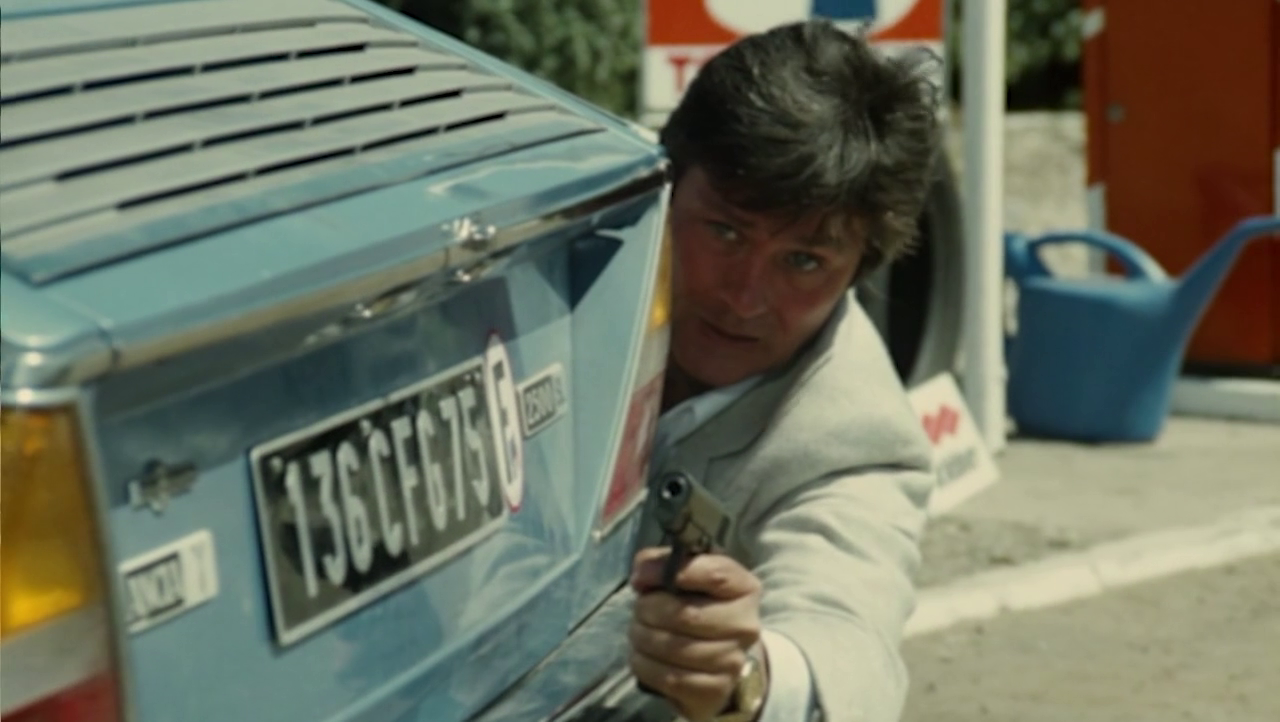
Three associates of an industrial arms dealer (Pierre Dux) are murdered in a single night after a screening where they've viewed footage of defective guided missiles; soon after, a wakeful poker player (Alain Delon) who transported one of them to the hospital from what he assumed was an innocent automotive accident finds himself targeted by hitmen (Daniel Breton, Peter Bonke) who, like their employers, wrongly imagine him a mercenary commissioned by rival interests -- a supposition seemingly affirmed by his fierce flair for survival. This first of several tense thrillers starring Delon in the '80s delivers sinuate suspense, exciting gunplay, as likably dashing a protagonist as any he's embodied, and not one but two malefactors behind the conspiracy that imperils him, who are detestable for their converse characteristics. Several of Delon's fine co-stars herein (Breton, Michel Auclair, Féodor Atkine, et al.) would reappear in more of his aforementioned crime flicks.
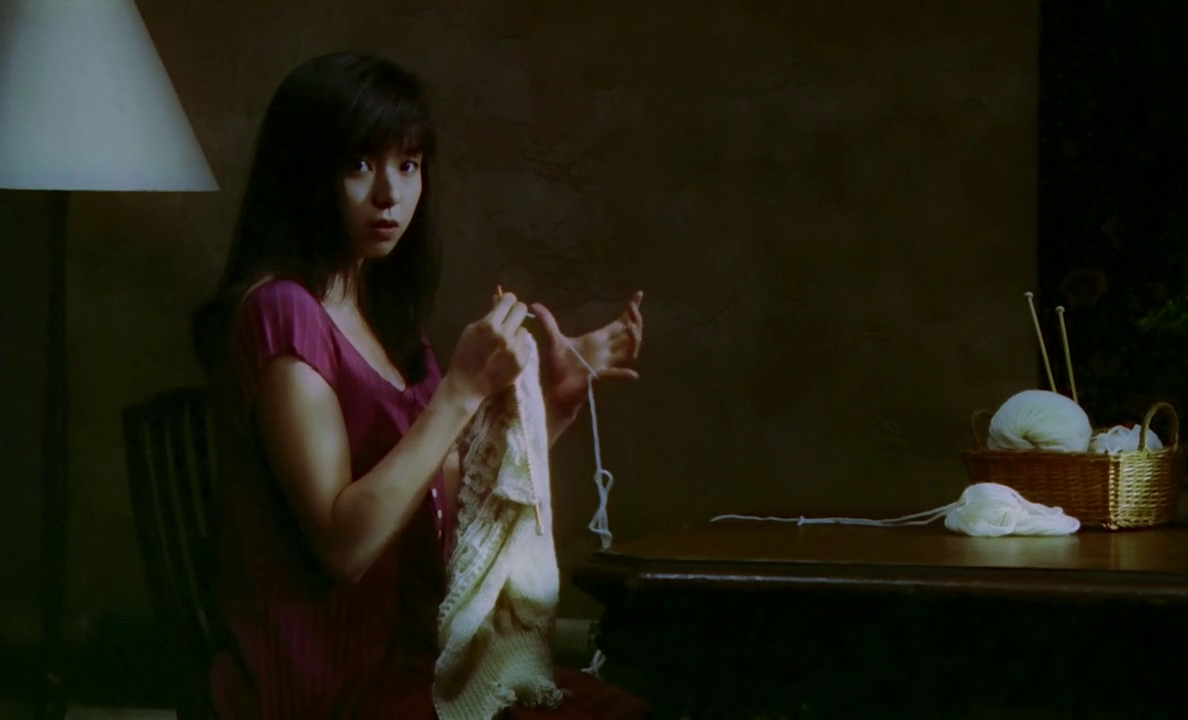
Smooching hasn't been the same since the cute girlfriend (Tomoko Yamaguchi) of a homeworking writer (Etsushi Toyokawa) had her braces removed; his consequent neglect prompts her to thoroughly twine everything in their stylish apartment to his exasperation. One recommended treatment suggested by their diagnosing psychiatrist (Tomoro Taguchi) might not suffice to treat her neurosis. Iwai's curious companion to Picnic treats quirkily of failures to adapt and accept one's partner's changes with a novel twist or twelve, and two vividly abnormal interperformances. As usual, Noboru Shinoda's richly saturated and shining cinematography only enhances Iwai's ambiences.
=]=:< <"They should've been nicer to that turtle. Poor little guy."
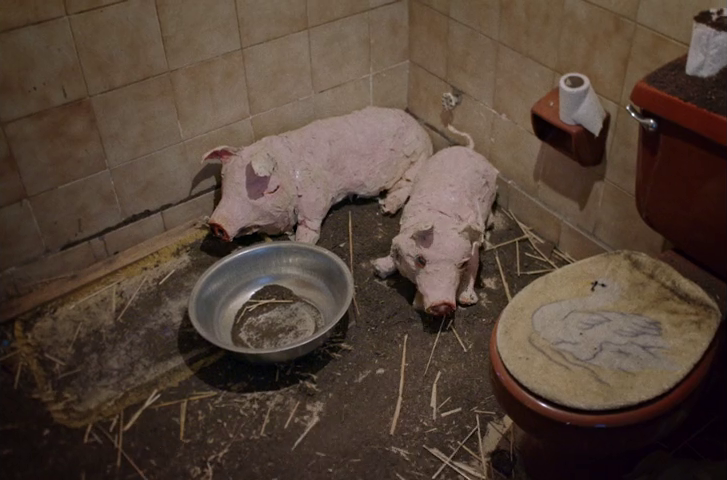
Form, setting, and action coalesce fluidly and frequently in Cristóbal León's and Joaquín Cociña's surrealist tale of a young woman (Amalia Kassai) who flees her German colony in rural Chile to assume residence in a house that dreamily adapts and reacts to her temperamental deportment, and befriends two pigs who metamorphose into her adoptive children before both seem to turn on her. Incessant mutability of scenery and figures is realized by hand-drawn and stop-motion animation that encompasses pencils, paints, puppets, papier-maché, and sculpture, unfolding and reworking mostly in an apparent single shot that's narrated indifferently in both German and Spanish. Heavily influenced by the infamy of Colonia Dignidad, this hyperexperimental fantasy is less ominous than comfortably absorbing -- an admirable instance of truly daring, economic filmmaking.
=]=:< <"That schizo bitch thinks they're her kids, but those pigs are probably dead and starting to turn. God, the possibilities make me so hungry!"
Is it cannibalism if a figurative pig is salivating at the thought of eating a literal pig?
=]=:< <"Who are you calling a pig?!"
You're just a pig!
=]=:< <"Yeah? Well, 'you're a lady of the night! You're just a lady of the night!' Ha ha ha ha ha ha!"
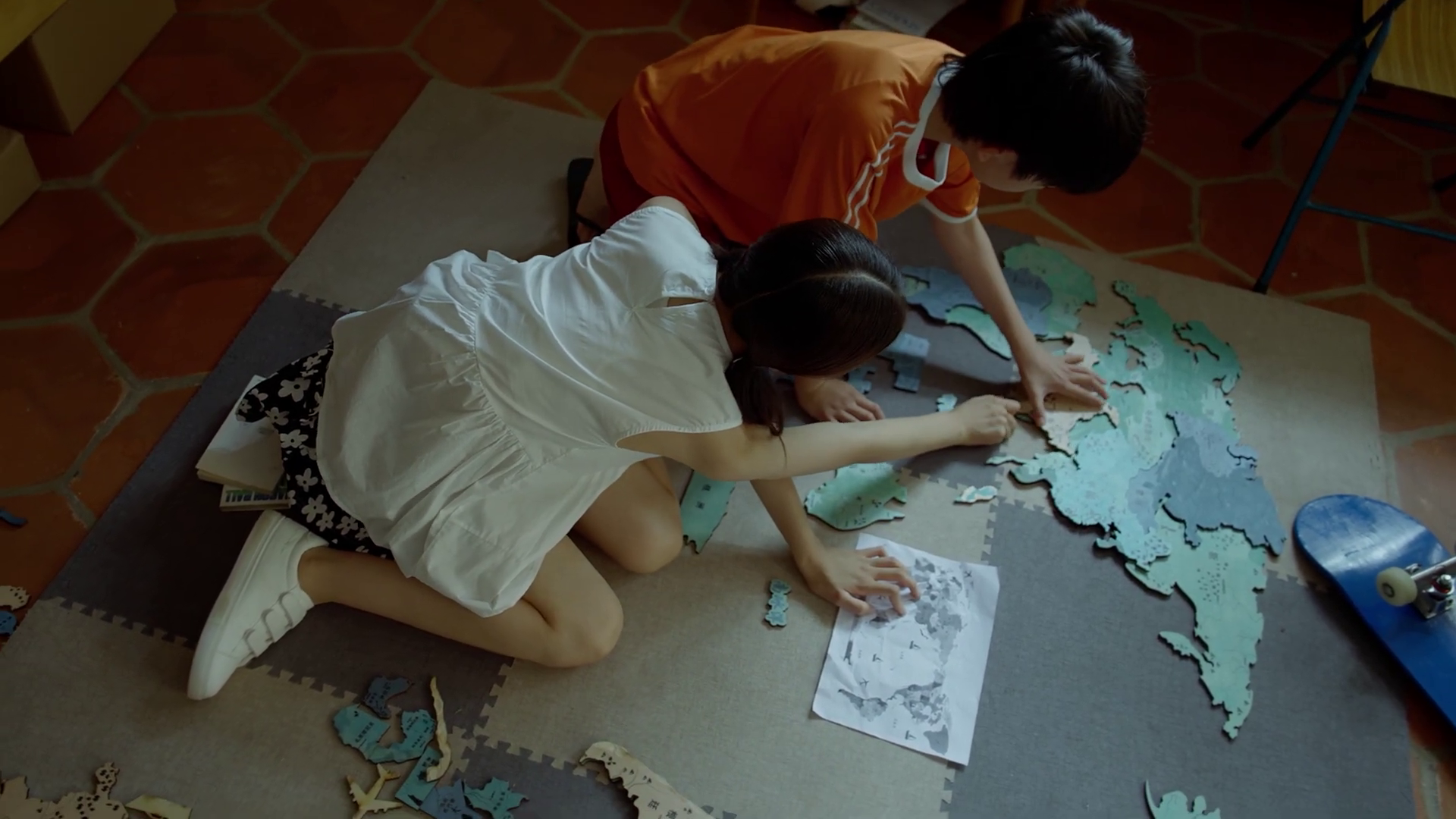
Lemon Elegy is a short story by Shunji Iwai that he first adapted as Fireworks, Should We See It from the Side or the Bottom? for telecast in 1993, then again in China this past summer as this charmingly bittersweet short. For reasons unknown, a classmate and crush (Ma Yirui) of a preteen boy (Peixi Wang) stays overnight at his house, where they bond awhile before they're torn apart by her mother's situational instability. Fans of the Sinophilic auteur will feel right at home with his usual smoothly rapid cuts between manual and Steadicam shots, and won't miss how Yirui's ensemble recalls that of Megumi Okina in Fireworks. Iwai is currently in a phase of re-releases (Love Letter, Swallowtail Butterfly, All About Lily Chou-Chou), remakes (Last Letter, A Summer Solstice Story), and revisitations (Luca on the Road), all of which manifest his enduring fascination with youth at its most intuitively intimate, brooding, and vital.
© 2025 Robert Buchanan